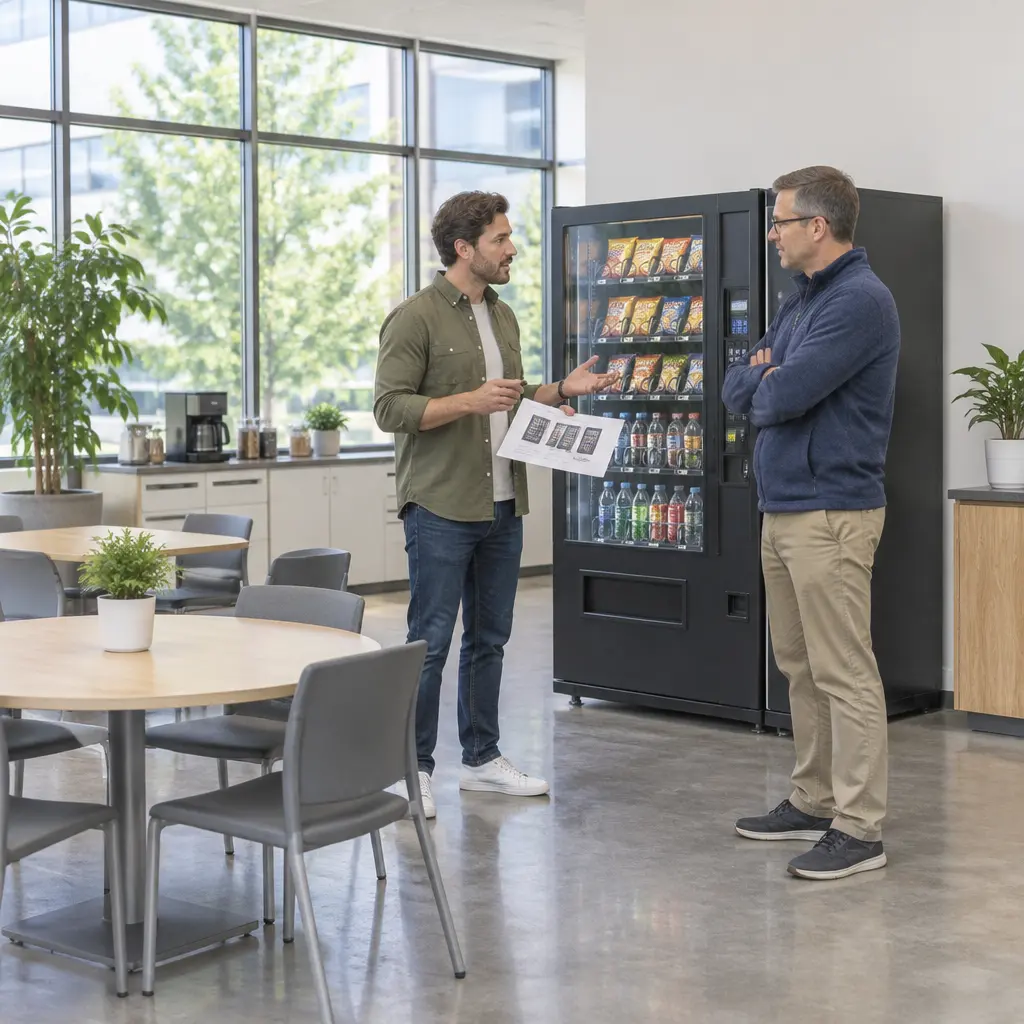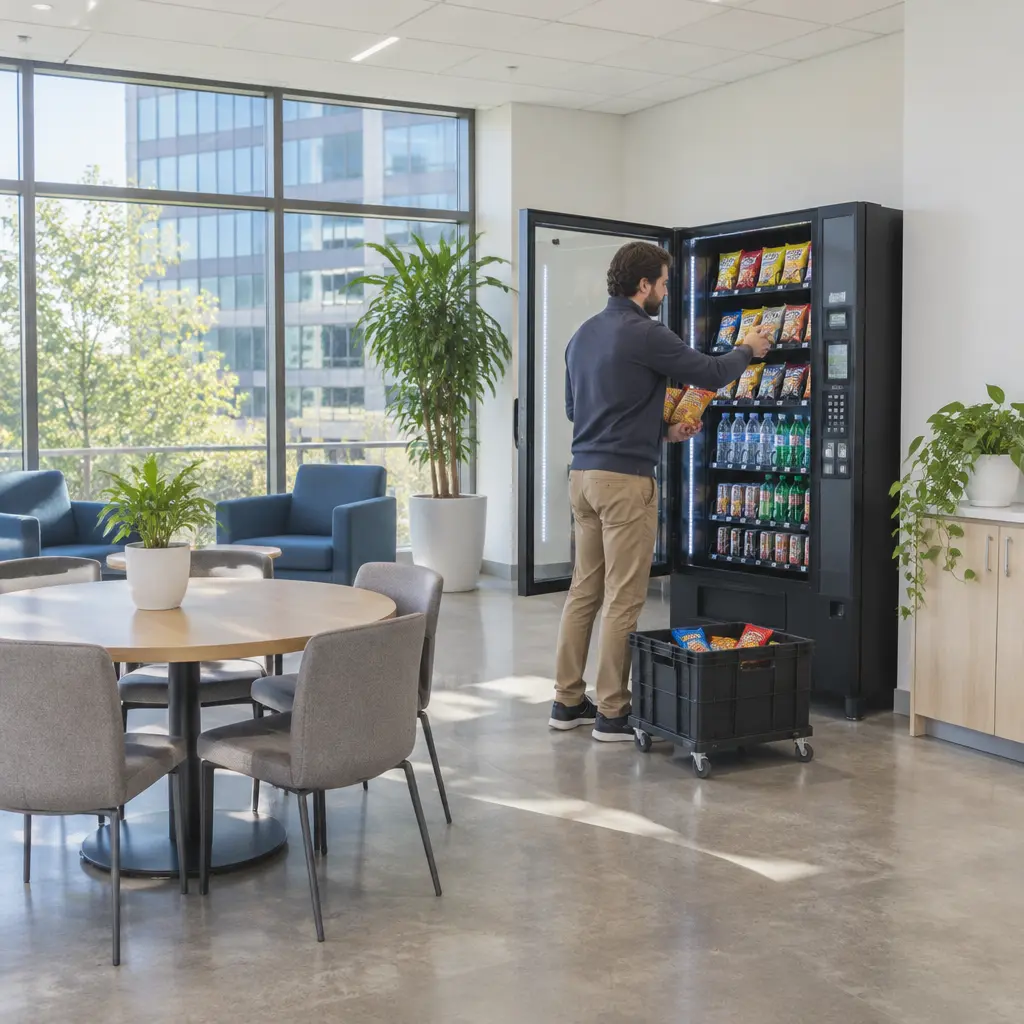
A vending machine business earns revenue by placing automated retail equipment where customers want convenient access to products, then keeping that equipment stocked, working, and financially viable. Its results depend less on the machine alone than on the combination of location, product selection, pricing, payment options, and operating costs. The U.S. Census Bureau’s 2022 Economic Census counted about 19,000 U.S. employer establishments in the vending machine operators industry, illustrating a substantial, established market. This guide explains the business model, machine and product choices, location economics, daily operations, startup costs, risks, and ways to assess whether a route can make money.
Vending machine operations define the business model
A vending machine business is a retail operation that sells goods through self-service machines, usually without an employee attending each transaction. The U.S. Census Bureau classifies vending machine operators under NAICS 445132; the classification covers operators primarily engaged in retailing merchandise through vending machines. In practical terms, the operator selects products, secures permission to place machines, replenishes inventory, handles customer issues, and collects the sales proceeds.
The model has several related forms, or hyponyms: traditional snack-and-drink routes, workplace micro-markets, coffee and hot-food vending, specialty-product machines, and bulk vending such as small toys or gumballs. These formats share automated sales but differ in inventory, equipment, service frequency, food-safety obligations, and the amount of space or customer traffic they need. The first decision is therefore not simply which machine to buy, but which retail format fits a specific location.
Traditional vending routes
A traditional route consists of machines at multiple sites, commonly offering packaged snacks and bottled or canned drinks. The route operator visits locations to inspect equipment, refill popular items, remove expired stock, and reconcile sales. Because revenue is distributed across sites, route density matters: nearby machines can reduce driving time and fuel costs compared with a scattered group of equally productive locations.
Micro-markets and unattended retail
A micro-market is a small, self-service retail area—often in a workplace—with open shelves, coolers, and a kiosk or cashless checkout rather than a conventional vending cabinet. It offers more product variety and can support fresh food, but requires more floor space, inventory control, and loss prevention. The National Automatic Merchandising Association (NAMA) tracks vending and related convenience-services sectors; its industry reports are useful for understanding this broader category, though market estimates vary with the products and services included.
Specialty and bulk machines
Specialty machines sell a narrower range of products, such as personal protective equipment, electronics accessories, beauty items, or prepared meals. Bulk machines typically dispense low-cost, nonperishable items in small quantities. Specialization can match a clear customer need, but operators should verify demand, product regulations, and replenishment logistics before investing in equipment designed for a single category.
Vending machine locations determine sales potential
A location is the site where a machine or unattended retail setup is installed under an agreement with a property owner or manager. Location quality depends on more than foot traffic: customers must have a reason and opportunity to buy, competing food options should be considered, and the operator must be able to service the site reliably. The U.S. Bureau of Labor Statistics’ Consumer Expenditure Surveys show that households spend across food categories, but national household averages cannot predict sales at a particular machine. Local traffic, work schedules, and customer preferences are more actionable measures.
Potential sites include offices, factories, schools, hospitals, hotels, apartment buildings, gyms, and transportation facilities. Each is a different customer context. A hospital may have round-the-clock demand but strict vendor and food rules; an office may have predictable weekday peaks; a gym may favor water and protein products. Before signing, estimate actual users, hours of access, nearby alternatives, and likely purchase occasions.
Location agreements and commissions
A placement agreement sets out the operator’s access, responsibilities, term, service expectations, and any payment to the site. Some property owners charge a fixed fee, some receive a percentage of sales, and others accept a machine as an employee or tenant amenity. There is no universal commission rate: it is negotiated and should be evaluated against realistic sales, gross margin, service costs, and the value of the location.
The agreement should clarify electricity, insurance, damage, refunds, exclusivity, termination, and responsibility for permits. Ask for a trial period or performance review when sales are uncertain. A favorable site contract cannot rescue a location with insufficient demand, so use a conservative sales forecast rather than relying on a landlord’s foot-traffic estimate alone.
Assessing demand before installation
Demand assessment means estimating how many people might buy, how often they pass the machine, and what they are likely to purchase. Operators can interview site managers and users, observe traffic at different times, review nearby food options, and test a limited assortment. For an existing machine, transaction records and inventory depletion provide better evidence than impressions. A simple sales dashboard can compare units sold, revenue, stockouts, refunds, and product waste by location and day.
A useful visual for planning is a location scorecard chart comparing sites on daily traffic, hours of access, competition, commission, service distance, and customer fit. The chart does not replace a pilot, but it makes trade-offs visible and helps prioritize locations for testing.
Vending machine economics connect revenue to costs
Vending economics describe how sales are converted into profit after product, location, equipment, payment, labor, and route costs. The Census Bureau’s Economic Census provides establishment and industry data, but it does not establish a typical profit for an individual operator. Profitability varies widely by location, product mix, machine utilization, and operating efficiency; consequently, a business plan should use its own supplier quotes and pilot sales rather than assume an industry-wide margin.
Revenue, gross margin, and break-even
Revenue is the amount collected from sales. Gross profit is revenue minus the cost of goods sold, while operating profit also subtracts expenses such as commissions, card-processing charges, fuel, repairs, insurance, and equipment financing. A basic planning formula is: monthly operating profit equals sales revenue minus inventory cost, site payments, payment fees, route and labor costs, maintenance, and other overhead.
Break-even analysis estimates the sales level at which income covers costs. For example, if a machine’s monthly fixed costs are $300 and its average contribution after product cost and transaction fees is $1 per sale, it needs about 300 sales per month to cover those fixed costs, before taxes and any uncounted owner labor. This is an illustrative calculation, not a typical vending-machine result; each operator should substitute actual prices, fees, and costs.
Startup investment and financing
Startup investment may include machines, delivery and installation, initial inventory, payment readers, business registration, insurance, permits, and working capital. Used equipment can lower the purchase price but may bring repair risk, outdated payment systems, or limited parts availability. A buyer should inspect the machine, verify refrigeration and safety features where relevant, confirm software and reader compatibility, and calculate the total installed cost rather than comparing sticker prices alone.
Financing or leasing preserves cash but adds recurring obligations. Before committing, compare the payment schedule with conservative sales estimates and account for seasonal changes, slow periods, and machine downtime. Keep a reserve for repairs and replenishment: a machine that cannot be restocked or fixed promptly can lose sales and damage the site relationship.
Pricing and product mix
Product mix is the assortment of items offered, while pricing balances customer acceptance with the cost of inventory, commissions, fees, and spoilage. Operators commonly start with a small selection based on the site’s needs, then use sales data to add popular items and remove slow movers. Pricing should also account for package size, local competition, and the machine’s cost to operate; raising prices without monitoring sales volume can reduce total contribution.
Vending machine operations require inventory, service, and compliance
Operations are the recurring tasks that keep machines available and customers served. They include purchasing, stocking, cleaning, cash and payment reconciliation, repairs, and responding to refunds or complaints. The Federal Trade Commission’s guidance on advertising and consumer protection is relevant to claims made about products, while food and business requirements are generally determined by federal, state, and local authorities. Requirements depend on what is sold and where the machine operates.
Inventory replenishment and waste control
Inventory management means keeping enough of the right products in stock without tying up excessive cash or allowing items to expire. Operators can set reorder levels using sales velocity and delivery lead time, rotate stock using first-in, first-out practices, and record shrinkage, spoilage, and stockouts. For perishable food, temperature control, date checks, and safe handling are essential. The U.S. Food and Drug Administration’s Food Code is a model used by many jurisdictions; operators should check the rules adopted by their local health department rather than assume one national rule applies everywhere.
Payments, telemetry, and customer service
Cashless readers let customers pay by card or compatible mobile methods, while telemetry can report sales, inventory levels, and machine faults remotely. These tools can reduce unnecessary service visits and reveal stockouts sooner, though readers and software may involve transaction or subscription fees. Operators should compare total costs and ensure payment devices meet applicable security requirements, including standards required by payment networks and processors.
Customer service includes clear contact information, reliable refund handling, and prompt resolution of failed transactions or product issues. Recording complaints by machine and product can reveal recurring equipment faults or assortment problems. Service quality also affects the relationship with the site host, who may judge the operator by cleanliness, availability, and responsiveness as much as by sales.
Licensing, taxes, and insurance
Legal and tax obligations depend on jurisdiction, business structure, product category, and location. Operators may need general business registration, sales-tax accounts, food permits, or location-specific approvals. The Internal Revenue Service explains federal business tax responsibilities, while state and local agencies determine many sales-tax and vending requirements. Confirm requirements with the relevant agencies before installing machines, especially for fresh food, regulated goods, or locations such as schools.
Insurance needs can include general liability, commercial auto, and coverage for equipment or inventory, depending on the route and contracts. A site agreement may specify minimum coverage or require the property owner to be named on a policy. An insurance professional can help match coverage to the actual risks and contractual obligations.
Vending machine risks shape growth and profitability
Risks include weak demand, theft or vandalism, equipment failure, spoilage, rising wholesale prices, payment outages, and the loss of a high-performing location. Route growth can also create operational strain: more machines mean more purchasing, servicing, recordkeeping, and vehicle time. These risks do not make the model unworkable, but they make disciplined measurement and gradual expansion important.
Common risks and practical controls
Operators can reduce exposure by testing sites before buying many machines, maintaining service records, securing equipment appropriately, and keeping backup suppliers for key products. Track sales and gross contribution by location, not just total revenue, because a busy machine may still perform poorly after commissions and service costs. Review contracts and equipment condition before acquiring an existing route, and verify sales claims against transaction records, invoices, and bank deposits where available.
A measured path to expansion
A practical expansion sequence is to validate one or a few locations, document the actual service time and unit economics, then add sites that fit the same route or customer profile. Standardizing machine settings, product ordering, and service checklists makes a growing operation easier to manage. Expansion is strongest when each new placement improves route density or adds proven demand, rather than simply increasing the machine count.
Conclusion: vending machine success depends on location and execution
A vending machine business combines automated retail with hands-on route management. Its business model spans traditional vending, micro-markets, and specialty formats; its location strategy determines access to customers; and its economics depend on sales contribution after inventory, commissions, fees, equipment, and service costs. Reliable replenishment, compliant operations, useful payment technology, and responsive customer service turn those components into a sustainable operation.
Before investing, research local rules, obtain equipment and product quotes, negotiate a clear placement agreement, and test demand with conservative assumptions. For further reading, consult the Census Bureau’s industry classifications and Economic Census, NAMA’s sector resources, and the applicable state and local agencies. Treat each machine as a measurable retail site, and expand only when the evidence supports it.
Sources: U.S. Census Bureau, 2022 Economic Census, NAICS 445132 Vending Machine Operators, https://www.census.gov/programs-surveys/economic-census.html; National Automatic Merchandising Association, Industry Resources, https://www.namanow.org/; U.S. Bureau of Labor Statistics, Consumer Expenditure Surveys, https://www.bls.gov/cex/; U.S. Food and Drug Administration, FDA Food Code, https://www.fda.gov/food/fda-food-code/food-code-2022; Internal Revenue Service, Small Business and Self-Employed Tax Center, https://www.irs.gov/businesses/small-businesses-self-employed; Federal Trade Commission, Advertising and Marketing Basics, https://www.ftc.gov/business-guidance/advertising-marketing