A smart vending machine is a connected, software-enabled unit that can monitor inventory, process digital payments, and send sales or equipment data to operators; a traditional vending machine generally relies on local controls and more manual servicing. The difference is not simply a touchscreen: it is the extent to which connectivity, data, and automation change how a machine is stocked, maintained, and used. Those capabilities matter in a large market: the National Automatic Merchandising Association’s 2024 industry census estimated U.S. convenience-services revenue at about $26.6 billion, spanning vending and related workplace services. This guide compares the machines’ technology, payments, inventory, maintenance, customer experience, costs, and practical use cases.
Smart Vending Machines Add Connectivity to Traditional Vending
“Smart vending machine” is a broad industry term rather than a single technical standard. In practice, it describes a vending unit connected to software or a network so that it can exchange information with an operator, payment provider, or customer-facing system. A traditional machine may still use electronic controls and accept cash or cards; what typically distinguishes a smart machine is its ability to report activity and support remote management.
The distinction is best understood across several related categories: telemetry-enabled machines, cashless or connected-payment machines, touchscreen and interactive machines, and more advanced computer-vision or automated-retail systems. Features vary by supplier, and a machine marketed as “smart” may have only some of them. The key question is what data and functions are actually connected.
Traditional vending machines: local operation and periodic servicing
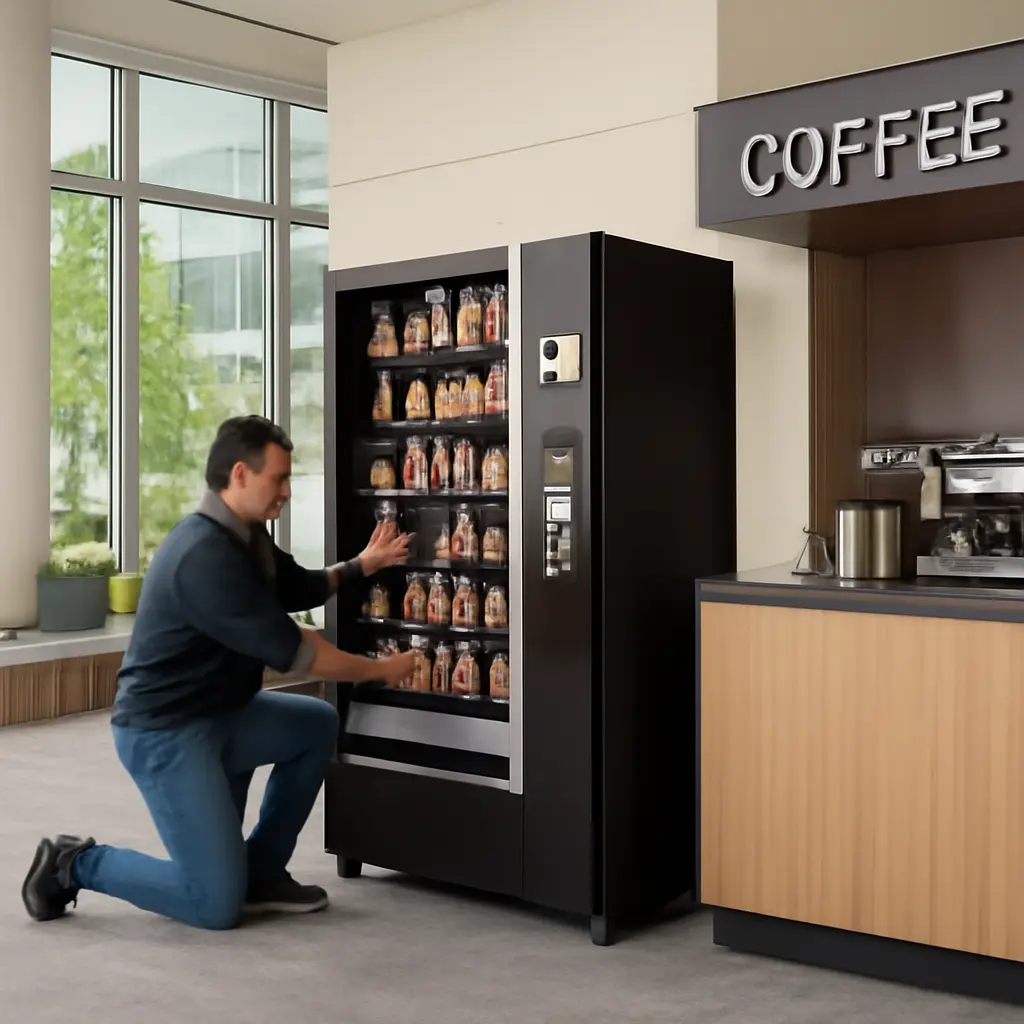
A traditional vending machine stores products and dispenses them after a customer makes a selection and pays. The operator generally learns about low stock, empty selections, or faults during scheduled visits, through customer reports, or from basic machine-level indicators. Some conventional machines include electronic payment or diagnostic functions, so “traditional” does not necessarily mean entirely mechanical or cash-only.
This model can be effective where sales are predictable, machines are close together, and the cost of adding connectivity is not justified. Its limitation is the gap between an operational problem occurring and the operator discovering it. For example, a sold-out popular item may remain unavailable until the next route visit.
Smart vending machines: connected monitoring and management
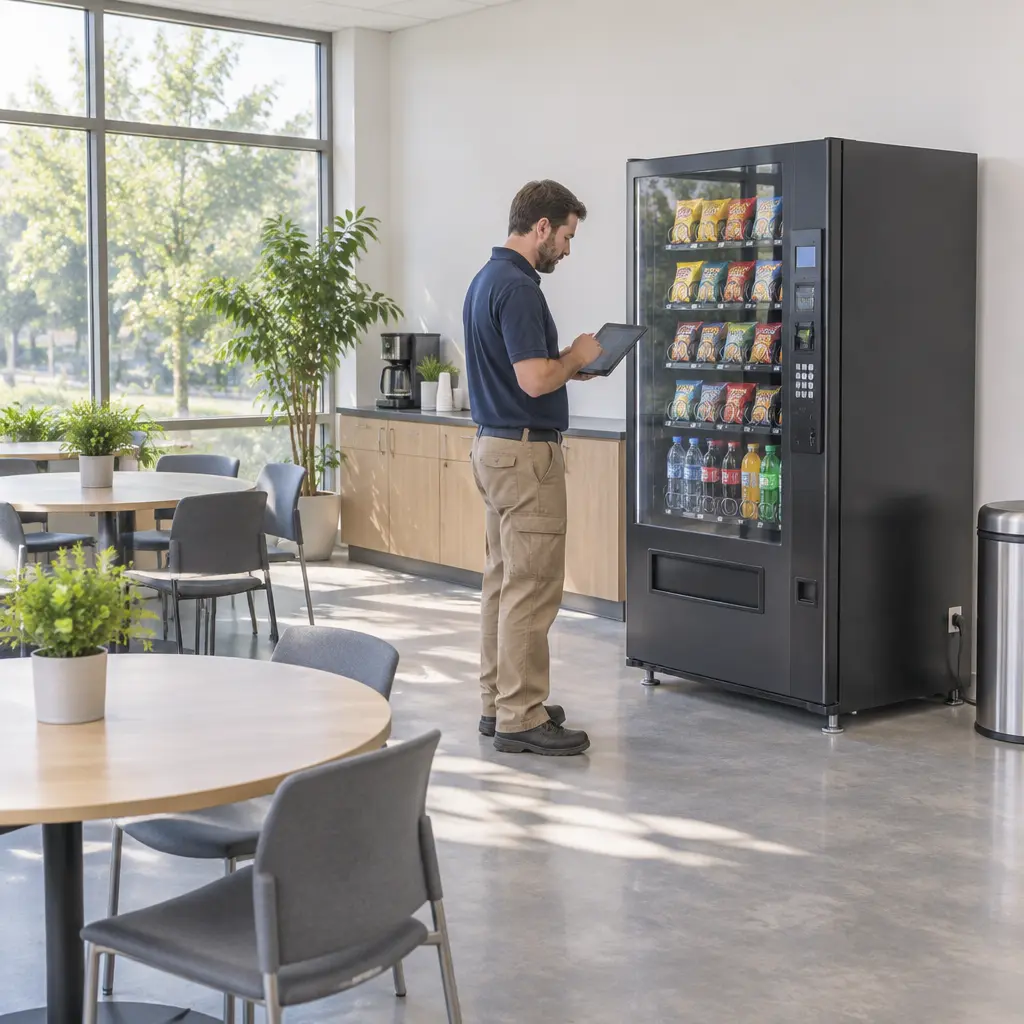
A smart vending machine usually sends information such as sales, inventory estimates, payment status, and fault alerts to a software platform. Depending on the system, the operator can view performance remotely, receive notifications, adjust product selections, or plan restocking based on reported demand. Connectivity may use cellular service, Wi-Fi, or another network, and the available features depend on the machine, sensors, and vendor software.
The practical difference is a shift from mainly route-based oversight to more data-informed management. Telemetry can help operators identify a machine that needs attention, but it does not guarantee accurate inventory readings or prevent every breakdown. Sensors, network coverage, integrations, and maintenance procedures all affect results.
Smart Vending Machines Improve Visibility Into Sales and Inventory
Inventory visibility is one of the clearest operational differences between connected and conventional vending. Traditional operators often rely on a driver’s observations during a visit. Connected systems can report sales and, where supported, product-level stock estimates, giving operators a better basis for deciding which locations to service and what to load.
Remote inventory and demand-based restocking
Remote inventory management means using machine data to estimate what has sold and what may need replenishing. This can support demand-based restocking: an operator can prioritize fast-moving products or locations instead of following an identical schedule for every machine. The quality of the estimate depends on how the machine tracks dispensing and whether the data is updated reliably.
The U.S. Environmental Protection Agency’s food-waste research emphasizes the scale of food loss across the supply chain, while vending-specific waste outcomes depend on product mix, expiration dates, and operating practices. Connected sales data can help operators make more informed purchasing and stocking decisions, but it should not be treated as proof that a particular machine reduces waste by a fixed percentage.
Sales analytics and product selection
Sales analytics are reports that organize transaction data by machine, product, time, or location. Operators may use them to compare product performance, identify peak periods, and test whether a change in assortment improves sales. Traditional machines can also produce sales records, but connected systems make remote consolidation and more frequent review easier when the equipment and software support it.
Analytics are useful only when interpreted in context. A low-selling item might reflect poor product fit, a high price, an empty slot, or a payment issue. Operators should compare machine data with site conditions and service records rather than making decisions from sales totals alone.
Smart Vending Machines Expand Payment and Customer Options
Payment capability is another major point of comparison. Traditional machines may accept coins and bills, while newer conventional models may also accept cards. Smart machines commonly connect to cashless payment systems and may support contactless cards, mobile wallets, or account-based purchasing. These options can make checkout more convenient, but they require compatible hardware, payment processing, connectivity, and ongoing fees.
Cashless and contactless transactions
Cashless vending allows customers to pay electronically rather than relying on cash. Contactless readers can accept tap-enabled cards and, where supported, mobile wallets. Federal Reserve research on U.S. payment use documents the continuing role of cards and other electronic methods in consumer transactions; however, payment preferences vary by customer, setting, and transaction size.
For operators, electronic payments can reduce dependence on coin collection and make purchases possible for customers who do not carry cash. They also introduce transaction fees, processor requirements, and potential connectivity or hardware failures. A well-planned installation should consider whether to retain cash acceptance, especially in locations where customers have limited access to digital payment methods.
Touchscreens, product information, and interactive features
Some smart machines use touchscreens to display product images, prices, ingredients, promotions, or selection guidance. Others provide remote menus or advertising. These features can make a larger assortment easier to browse, but they are not required for a machine to be smart: a connected machine may have no customer-facing screen at all.
Operators should ensure that on-screen prices and product details remain accurate and that the interface is usable for people with disabilities. Accessibility expectations may involve applicable requirements such as the Americans with Disabilities Act, depending on the machine, location, and service arrangement. A screen should improve access rather than create a barrier for customers who prefer physical buttons or need assistive features.
Smart Vending Machines Support Remote Maintenance and Better Service Planning
Remote maintenance uses machine-generated information to help diagnose operational issues without first visiting the site. A connected machine may send an alert for a temperature problem, payment fault, or other detected condition. Traditional machines are more likely to depend on scheduled inspection or a customer contacting the operator, although diagnostic capability varies across models.
Fault alerts and equipment monitoring
Equipment monitoring is the collection of operating signals, such as power status, refrigeration temperature, or error codes, where the machine has the relevant sensors. Alerts can help operators prioritize repairs and may reduce unnecessary trips when a machine is operating normally. They cannot replace physical inspection, and an alert system is only as useful as its sensor accuracy, network availability, and response process.
For refrigerated vending, monitoring can be especially relevant because temperature problems may affect product quality and food safety. Operators still need documented procedures, appropriate temperature controls, and compliance with applicable food-safety rules; a remote dashboard is not a substitute for those responsibilities.
Route planning and service efficiency
Route planning is the process of deciding which machines to visit, when to visit them, and what products or supplies to bring. Sales and status data can help prioritize machines that are low on stock or need repair. The potential benefit is fewer low-value visits and better preparation for each stop, but actual savings depend on route density, labor costs, service frequency, and the accuracy of machine reports.
A useful comparison is to track baseline measures before and after deployment: stockout frequency, service visits per machine, response time to faults, spoilage, and total operating cost. This avoids assuming that installing connected equipment automatically improves performance.
Smart Vending Machines Cost More but May Create Operational Value
Smart machines commonly involve higher upfront or recurring costs than basic machines. Potential expenses include connected hardware, software subscriptions, cellular data, payment processing, installation, integration, and staff training. Traditional machines may have lower initial complexity, but manual checking, cash handling, and missed sales can also carry costs.
Total cost of ownership
Total cost of ownership is the full cost of buying and operating equipment over its useful life, not just its purchase price. A fair comparison should include machine acquisition or leasing, repairs, product spoilage, route labor, payment fees, software, connectivity, and the cost of downtime. The result is location-specific; a high-volume machine may justify advanced monitoring more readily than a low-volume machine with infrequent service needs.
Before purchasing, operators can request a written breakdown of setup and recurring charges, data ownership terms, supported payment methods, warranty coverage, software updates, and what happens if the service contract ends. These details help reveal whether a proposed smart-vending system is economically sustainable.
Security, privacy, and system compatibility
Connected vending introduces cybersecurity and privacy considerations that are less prominent in a standalone machine. Payment data should be handled through appropriately secured payment services, and operators should ask vendors about access controls, software updates, incident response, and data retention. If a system collects customer information, the operator should understand what is collected and how it is used.
Compatibility is also important. A machine’s telemetry platform may not integrate with an operator’s inventory, accounting, or route-planning software. Confirming data export options, network requirements, and support arrangements before deployment can reduce the risk of being locked into a system that does not fit existing operations.
Smart Vending Machines Fit Some Locations Better Than Others
The best choice depends on the operating environment, customer needs, and business goals. Smart vending may be especially useful across dispersed locations, high-traffic sites, or machines that sell varied or perishable products. Traditional machines can remain practical in low-volume settings where simple operation and lower equipment costs are priorities.
Workplaces, campuses, and public venues
Workplaces and campuses may benefit from cashless payments, product-level sales analysis, and remote stock monitoring because customer demand can change by shift, term, or event. A connected system can help operators adjust assortments and service timing. The scale of benefit depends on the number of machines, usage patterns, and the organization’s ability to act on the data.
Micro-markets and unattended retail
A micro-market is a self-service retail area that typically offers open shelves or coolers, electronic checkout, and a broader assortment than a single vending machine. It is related to smart vending but is not the same thing: it may use kiosks, access controls, or other unattended-retail technology rather than a conventional product-dispensing cabinet. The National Automatic Merchandising Association includes micro-markets and other convenience services within the wider industry landscape, illustrating how unattended retail has expanded beyond classic vending formats.
This broader category can suit sites seeking more product variety, while traditional vending remains compact and self-contained. Operators should compare space, security, replenishment needs, transaction systems, and customer volume before choosing between them.
Conclusion: Smart Vending Machines Turn Equipment Data Into Decisions
Smart vending machines differ from traditional machines mainly through connectivity: they can report sales and operating conditions, support remote inventory oversight, enable cashless or interactive features, and inform maintenance and route planning. Traditional machines can still be a sensible, lower-complexity choice, and many modern machines combine conventional dispensing with selected digital capabilities.
The broader implication is that vending is increasingly managed as a data-enabled service, not just a collection of machines. Before investing, compare total ownership costs, confirm security and compatibility, and measure outcomes such as stockouts, service visits, payment success, and downtime. Operators considering an upgrade should pilot connected equipment at representative locations and use the results to guide a wider rollout.
Sources: National Automatic Merchandising Association, 2024 Industry Census and State of the Industry Report, https://www.vending.org/; U.S. Environmental Protection Agency, Sustainable Management of Food, https://www.epa.gov/sustainable-management-food; Federal Reserve, Diary of Consumer Payment Choice, https://www.federalreserve.gov/paymentsystems/diary.htm; U.S. Department of Justice, Americans with Disabilities Act, https://www.ada.gov/; U.S. Food and Drug Administration, Food Code, https://www.fda.gov/food/fda-food-code/food-code-2022