Pitching a business to host your vending machine means showing the owner or manager how the machine can serve their customers or employees while requiring little effort from the host. A strong proposal connects a location’s needs to a suitable product mix, explains placement and servicing, and makes the financial arrangement transparent. The National Automatic Merchandising Association (NAMA) reports that the U.S. convenience services industry generated an estimated $26.6 billion in 2023, illustrating the scale of vending and related services—but a viable machine still depends on a good site fit and a clear, credible pitch.
Business Pitching Defines the Vending-Machine Host Proposal
A vending-machine host proposal is a concise business case asking a property owner, employer, or site manager to permit a machine on their premises. It describes what the operator will provide, how the machine benefits the location, and how practical matters such as space, electricity, restocking, maintenance, insurance, and compensation will be handled. The U.S. Small Business Administration advises entrepreneurs to understand their market, customers, and competition before committing to a business plan; applied to vending, that means researching the specific site rather than making a generic request.
Common proposal types include an employee amenity pitch for a workplace, a customer-convenience pitch for a retail or service location, and a specialized offer for settings such as gyms, schools, or healthcare facilities. Each should match the products, operating conditions, and customer needs of its location. A machine suited to a late-shift warehouse, for example, may be a poor fit for a boutique with limited floor space.
Location Fit and Customer Demand
Location fit is the degree to which a site’s people, routines, and physical layout support convenient purchases from a machine. Before contacting a decision-maker, estimate who will use it, when they are present, what nearby alternatives exist, and whether the location has enough suitable space. Use observable evidence—such as shift schedules, customer wait times, or a site walk-through—rather than promising sales without data.
The U.S. Census Bureau’s County Business Patterns and Statistics of U.S. Businesses datasets can help identify businesses and employment by geography and industry, providing broader market context. They cannot predict sales at an individual address, so pair public data with direct site research. Ask about peak periods, current break-room or snack options, and any restrictions on food, beverages, or equipment.
Host Benefits and Low-Burden Operations
A persuasive pitch translates the machine’s features into benefits the host values: convenient access to refreshments, a possible amenity for staff or visitors, and an additional service without the host having to operate a shop. These benefits should be presented as potential outcomes, not guaranteed improvements in retention, satisfaction, or revenue.
Explain who owns and services the machine, who pays for electricity, how often it will be checked, and how customers can report a problem. The Federal Trade Commission’s guidance on advertising emphasizes that objective claims should be truthful and supported. Accordingly, avoid unsupported sales forecasts or claims such as “no cost” unless the agreement really leaves the host with no direct or indirect expense.
Proposal Design Strengthens the Vending-Machine Pitch
Proposal design is the process of turning a site assessment into a short, tailored offer that a decision-maker can evaluate. A practical pitch generally includes the proposed machine and products, the reason they suit the site, the service plan, the host’s responsibilities, and the commercial terms. Keep the initial request brief; offer a one-page proposal or follow-up discussion for the operational details.
Product Mix and Machine Choice
The product mix is the selection of items offered, while machine choice covers the equipment and payment options used to sell them. Recommend products based on the site’s actual audience and any host policies. A fitness facility may prefer water and suitable snacks; an office may ask for a mix of beverages and convenience items. Confirm dietary, allergen, age-related, or nutrition requirements before proposing products.
The U.S. Food and Drug Administration explains that packaged-food labels provide information such as ingredients and major allergens. Operators should maintain accurate product information and follow applicable food-safety and labeling requirements. For machines that accept cards or mobile payments, disclose the proposed payment methods and how refunds or transaction issues are handled.
Service, Safety, and Accessibility
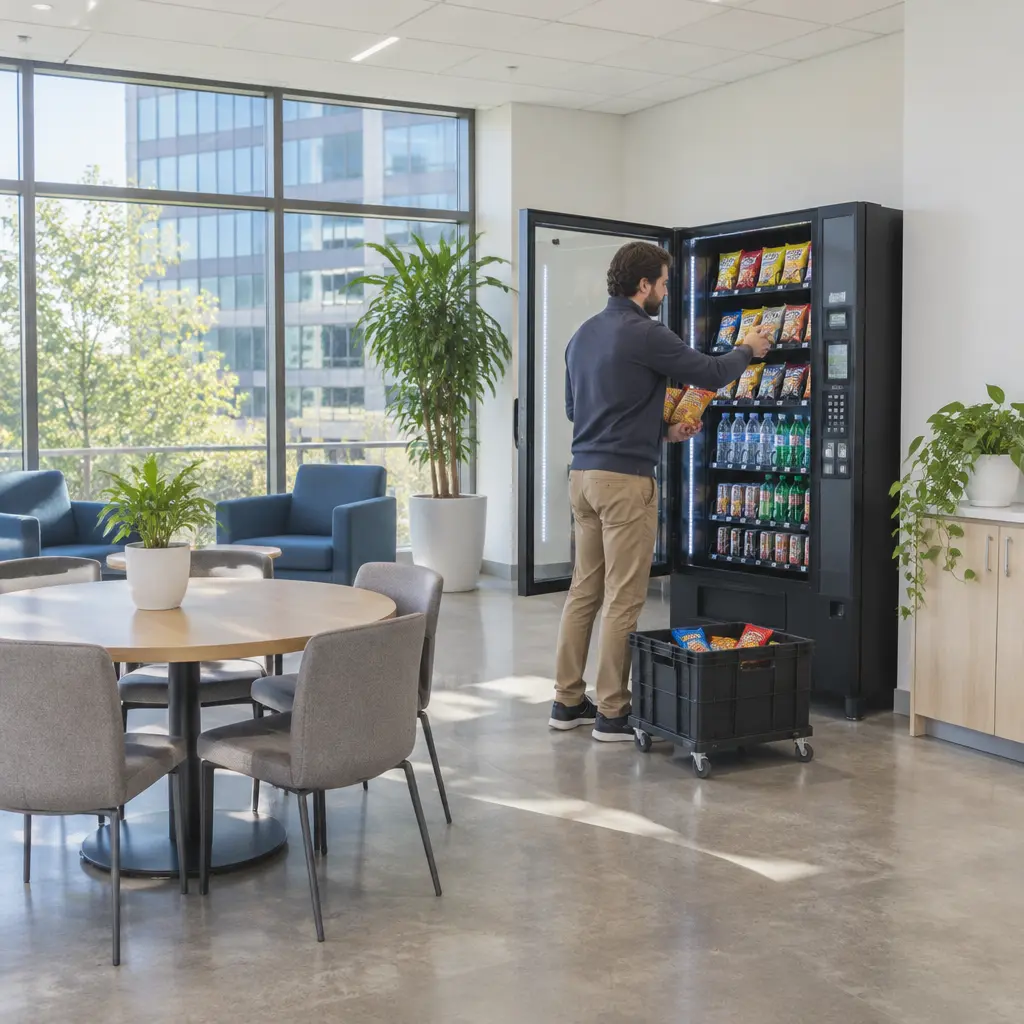
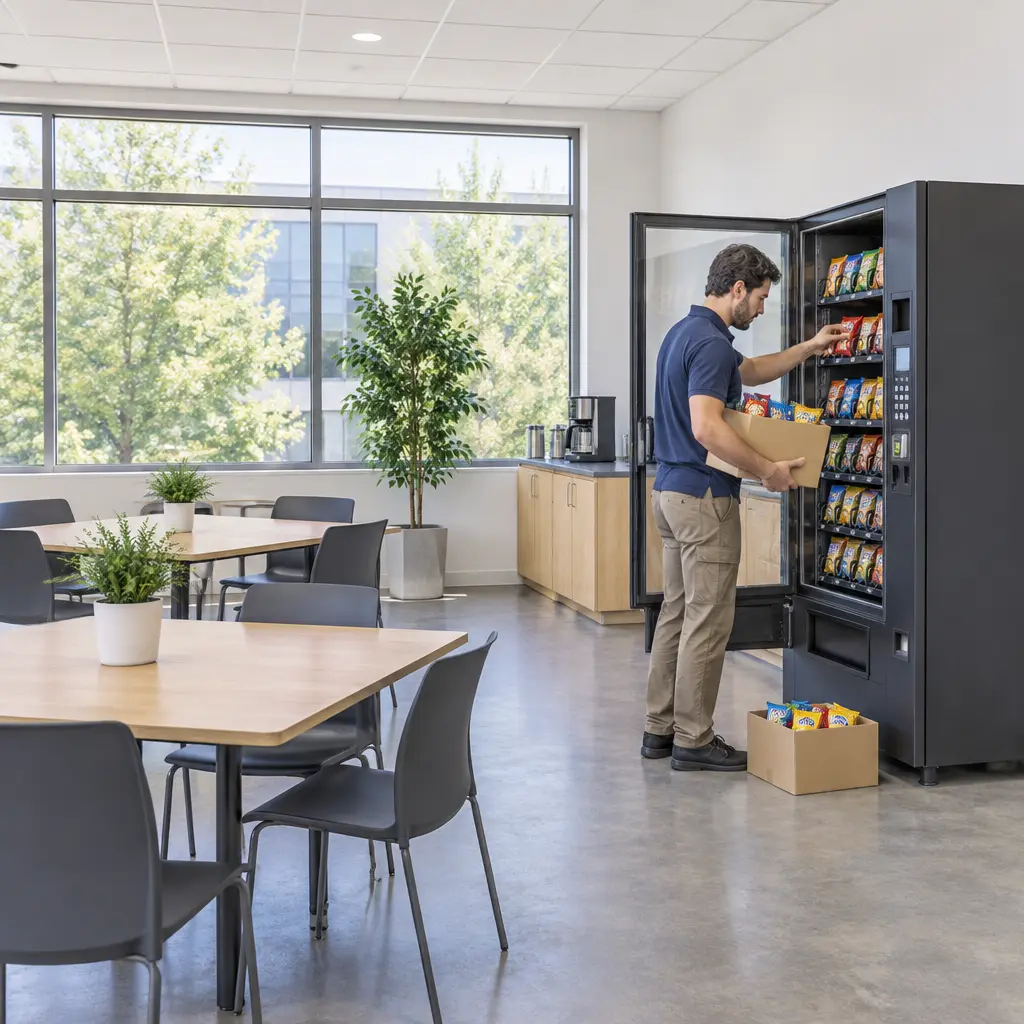
A service plan specifies restocking, cleaning, repairs, customer support, and response expectations. State who will enter the premises, how access will be coordinated, and how the operator will keep the machine and surrounding area orderly. The host should also know how to request a product change, report a malfunction, or ask for removal.
Placement must account for walkways, exits, power access, and the needs of people with disabilities. The U.S. Access Board’s ADA Accessibility Standards establish requirements for accessible routes and spaces in covered facilities; the precise obligations depend on the site and installation. Ask the host to approve the location and confirm any building, fire-safety, electrical, or accessibility requirements before installation.
Financial Terms and Agreement
Financial terms explain how the operator and host handle revenue, costs, and risk. Possible arrangements include no commission, a fixed payment, or a percentage of sales. Any proposed commission should be based on realistic sales assumptions and clearly define how sales are measured, when payments are made, and what deductions—if any—apply. Do not present a percentage as standard for every location; terms vary with traffic, product economics, and the operator’s costs.
Put the arrangement in writing. Address the term, renewal, termination, machine ownership, electricity, insurance, permits, taxes, damage, access, product standards, and responsibility for customer complaints. The SBA recommends checking federal, state, and local rules relevant to a business; vending operators should verify requirements with the appropriate agencies and an insurance or legal professional rather than assuming one location’s rules apply everywhere.
Outreach Converts the Vending-Machine Proposal Into a Site Conversation
Outreach is the process of identifying the right decision-maker, presenting a relevant reason to talk, and following up professionally. The best contact may be a facilities manager, office administrator, property manager, owner, or procurement lead, depending on the organization. A short, personalized message is more effective than sending the same broad sales pitch to every business.
A Practical Pitch Structure
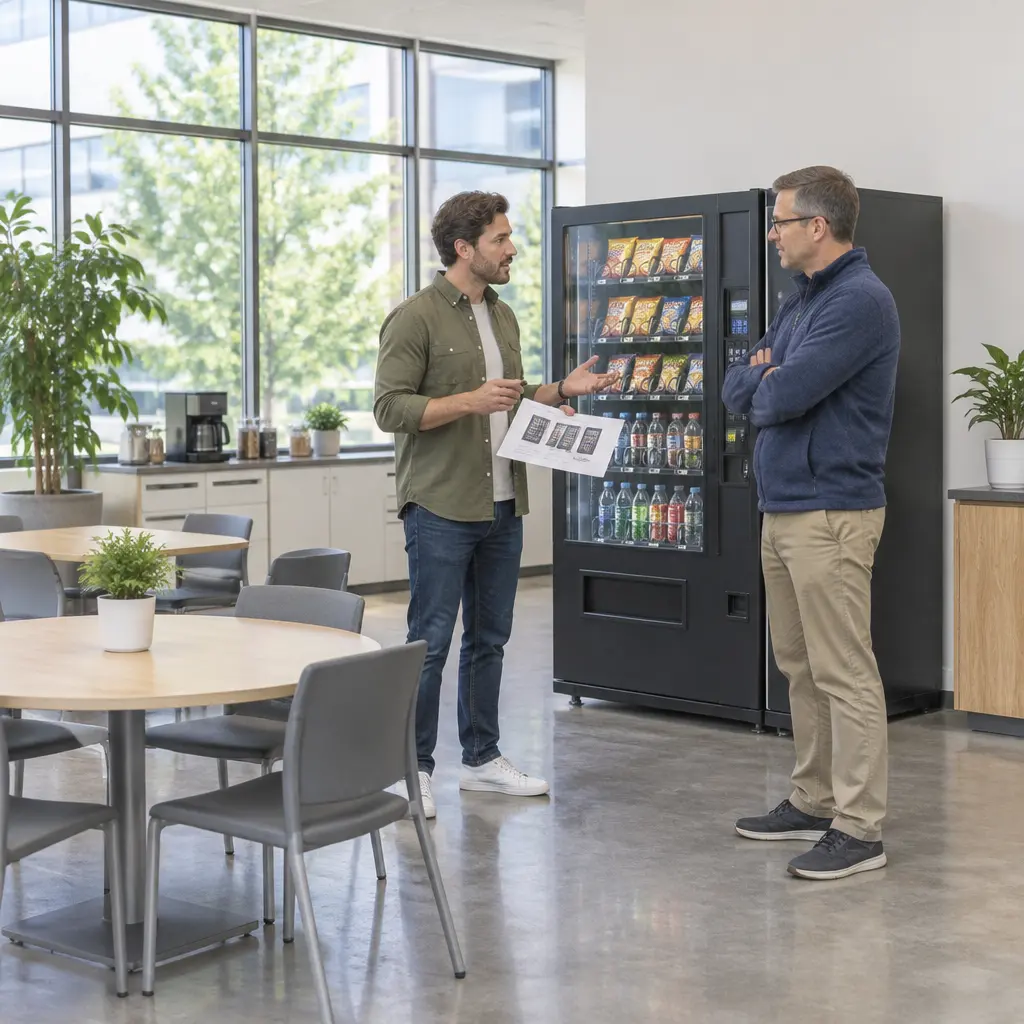
A useful pitch follows a simple sequence: establish why the location may benefit, describe the proposed machine and service, explain the host’s obligations and options, and ask for a brief conversation or site review. For example: “I operate locally serviced vending machines and noticed your team works late shifts. I’d like to learn whether convenient snacks and drinks would be useful. I handle stocking and repairs, and we can review placement and terms together before making any commitment.” Adapt the example to verified facts about the business.
- Research the site and identify the person responsible for amenities or facilities.
- Lead with a specific, evidence-based observation about the location.
- Summarize the machine, product approach, and service responsibilities.
- Invite questions and offer to assess the site before proposing final terms.
- Send a concise written recap and follow up at a reasonable interval.
Objections and Pilot Arrangements
Common objections concern space, noise, power use, product suitability, cleaning, security, and whether the machine will be used. Respond by asking what specifically worries the decision-maker, then offer a relevant solution: a smaller unit, a different assortment, an agreed service schedule, or no installation until the site requirements are confirmed. Do not dismiss concerns or imply that the host has no risk.
A pilot can reduce uncertainty when both parties agree on a limited trial. Define its duration, success measures, service expectations, and removal process in writing. Track useful indicators such as transactions, stockouts, service calls, and host feedback. A pilot’s results describe that site and period; they are not a guarantee of future performance elsewhere.
Examples Show How the Vending-Machine Pitch Changes by Site
A strong pitch changes with the host’s purpose and audience. These examples illustrate how to tailor the proposal; they are not claims of measured results.
Workplace or Warehouse
For a workplace with staggered shifts, emphasize access during breaks and explain how restocking can happen without disrupting operations. Ask about employee headcount by shift, break-room access, preferred products, and security procedures. A compact machine or varied payment options may matter more than a large commission if the primary goal is an employee amenity.
Gym, Clinic, or Visitor-Facing Business
At a gym, discuss the facility’s product standards and whether chilled drinks or other approved items fit member expectations. In a clinic, prioritize the host’s policies, patient needs, cleanliness, and placement that does not obstruct circulation. At a salon, laundromat, or service business, consider customer dwell time and the limited floor area. In every case, confirm the site’s rules before naming specific products or promising a particular machine layout.
Conclusion: A Clear Vending-Machine Pitch Builds a Better Host Partnership
A successful vending-machine pitch begins with location fit, explains host benefits without overpromising, and backs the proposal with a realistic product, service, safety, and financial plan. Tailored outreach opens the conversation; a written agreement and, where appropriate, a measured pilot help both parties assess the arrangement. Research the site, verify local requirements, and prepare a concise proposal before contacting a decision-maker. The broader lesson is that vending is not just equipment placement—it is an ongoing service relationship built around the host’s needs.
Sources: National Automatic Merchandising Association, 2024 Industry Census, https://www.namanow.org/industry-resources/industry-census/; U.S. Small Business Administration, Market Research and Competitive Analysis, https://www.sba.gov/business-guide/plan-your-business/market-research-competitive-analysis; U.S. Census Bureau, County Business Patterns, https://www.census.gov/programs-surveys/cbp.html; U.S. Census Bureau, Statistics of U.S. Businesses, https://www.census.gov/programs-surveys/susb.html; Federal Trade Commission, Advertising and Marketing Basics, https://www.ftc.gov/business-guidance/advertising-marketing; U.S. Food and Drug Administration, Food Labels, https://www.fda.gov/food/nutrition-facts-label/food-labels; U.S. Access Board, ADA Accessibility Standards, https://www.access-board.gov/ada/