
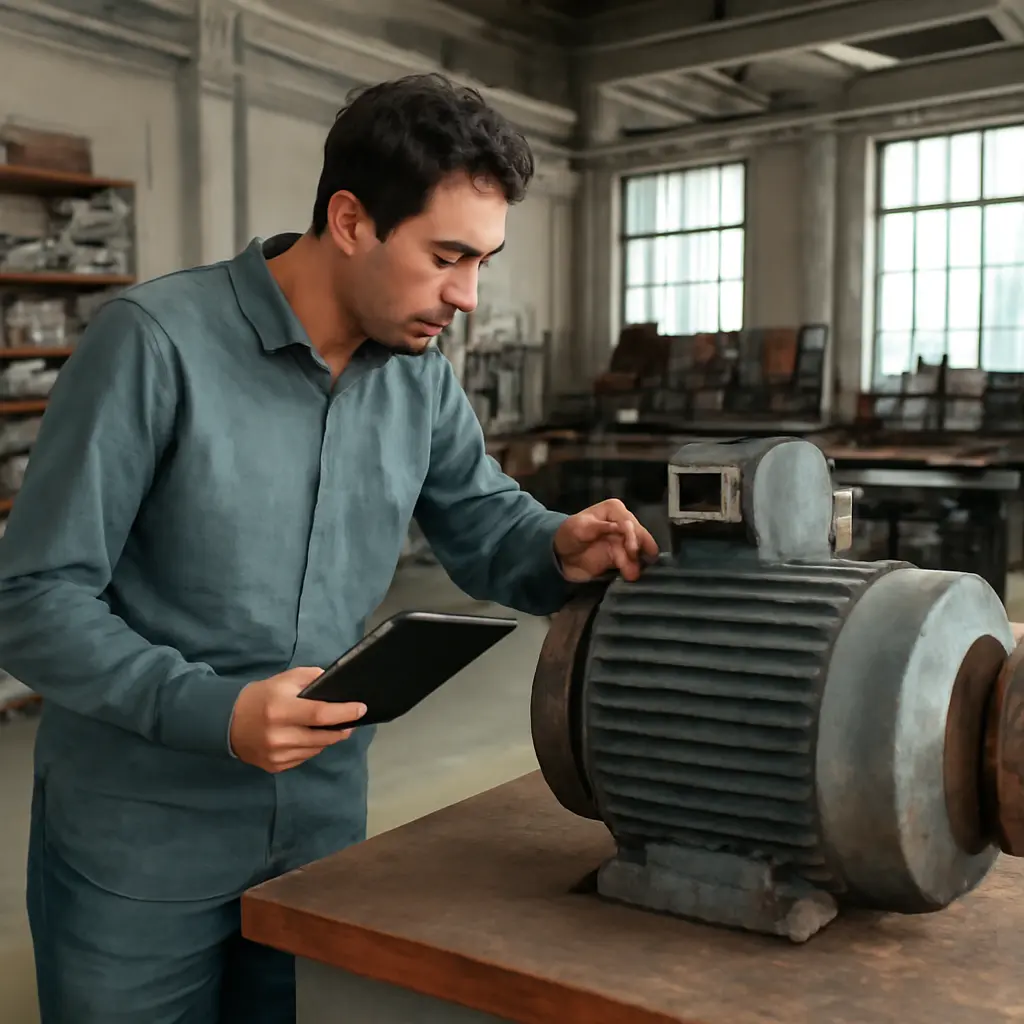
A refurbished machine is equipment that has been returned, inspected, repaired, or restored before resale; a pristine machine is represented as new or unused. The most reliable way to tell them apart is to compare the seller’s claims with the machine’s serial-number history, physical wear, operating hours, packaging, warranty, and written condition disclosures. That matters because a low price can conceal prior use or repair, while a refurbished unit can still be a sound purchase when it is accurately labeled and backed by a clear warranty. The FTC’s guidance on used-car sales illustrates a broader consumer principle: buyers should get material condition claims and promises in writing rather than rely on verbal assurances.
Machine condition labels and the meaning of “pristine”
There is no single, universal definition of “pristine” that applies to every type of machine. In a sale, it is best understood as a claim about condition—often implying new, unused, or exceptionally clean—not as proof that a product has never been returned, repaired, or operated. “Refurbished,” “reconditioned,” “renewed,” and “open-box” can also mean different things depending on the seller, product category, and applicable rules. The FTC advises consumers to understand what a seller means by a condition description and to retain written representations.
A useful distinction is between a machine’s history and its current condition. A refurbished machine may look and work well today but still have a return, repair, or prior-use history. Conversely, a sealed box is not conclusive evidence that the device itself is new: packaging can be replaced, and serial-number records or service documentation may tell a different story.
New, open-box, used, and refurbished
“New” generally means sold as new by the seller, but buyers should verify whether the item was previously sold, returned, demonstrated, or repaired. “Open-box” usually signals opened packaging, though the unit’s use and inspection history can vary. “Used” means the machine has had a previous owner or use. “Refurbished” typically indicates that a returned or previously used item was inspected and may have been repaired or restored; it does not, by itself, establish who performed the work, what parts were replaced, or how extensively the machine was tested.
These labels are not interchangeable. Ask the seller to state in writing whether the unit is new, returned, previously operated, repaired, or refurbished—and whether any replacement parts are original or third-party.
Why clear disclosure matters
The U.S. Federal Trade Commission’s Guides Against Deceptive Pricing explain that advertising claims should not mislead consumers about a product’s price or value. For a machine advertised as pristine, the practical question is whether the seller’s wording creates a false impression about condition or history. The FTC also recommends getting promises and warranties in writing and checking return policies before purchase. Those steps are useful whether the equipment is a laptop, phone, appliance, camera, or industrial machine.
Physical and digital signs of refurbishment
No single clue proves that a machine was refurbished. Look for several independent signs, then ask the seller to explain any mismatch between the advertised condition and the evidence. Cosmetic wear can be consistent with ordinary handling, while hidden service history may be visible only in system menus, diagnostic reports, or manufacturer records.
Wear, fasteners, and replaced components
Inspect high-contact areas: keyboard keys, trackpads, buttons, handles, grips, ports, hinges, feet, and power connectors. Polished keys, worn labels, scratches around screws, mismatched fasteners, tool marks, uneven seams, adhesive residue, or a casing that does not sit flush may indicate use or repair. On appliances and workshop equipment, check control panels, handles, panels, hoses, and surfaces normally hidden during display.
These clues are suggestive rather than conclusive. A legitimate factory repair may leave little visible evidence, while a new machine can acquire superficial marks in shipping. Photograph anything concerning and compare it with the seller’s listing before accepting delivery.
Serial numbers, activation, and service history
Match the serial number on the machine to the box, invoice, and warranty documents. Use the manufacturer’s official support or warranty-check service to see whether the model and serial number are recognized and whether coverage has already started or expired. For computers and phones, check for previous user accounts, activation locks, device-management profiles, or enrollment that should not be present on a genuinely new retail unit. For commercial machines, request maintenance logs, meter readings, inspection reports, and records of replaced parts.
A warranty date can be affected by registration or point-of-sale records, so an earlier start date is a reason to investigate—not automatic proof of refurbishment. Ask the manufacturer or authorized service provider to clarify the record, and keep their response.
Operating hours, battery health, and diagnostic counters
Many machines retain indicators of use. Computers may report battery cycle count or storage health; cameras may provide shutter-count information; printers may show page counts; generators and industrial equipment may record running hours. Compare those readings with the seller’s claim and the manufacturer’s expected reporting method. Counters can sometimes be reset, replaced, or interpreted incorrectly, so use them alongside physical inspection and service records rather than treating one number as definitive.
A low count does not prove a machine is new, and a replacement component may have its own newer counter. If the reading is important to value or safety, ask a qualified technician to inspect the machine and explain the diagnostic report.
Packaging, accessories, and documentation
Look for missing seals, generic or replacement packaging, absent manuals, incomplete accessories, duplicate labels, or a mismatch between the box and device serial numbers. These details can indicate a return or repackaging, but they do not establish that the machine is defective or refurbished. Confirm whether accessories are original, compatible replacements, or simply not included.
A credible seller should be able to provide a detailed invoice, the exact condition grade, warranty terms, return window, and any known repair or replacement history. “Like new” is not a substitute for those specifics.
Seller claims, warranties, and practical verification
Once a buyer has gathered clues, the next step is to verify the seller’s account. The strongest evidence combines written disclosures, manufacturer or service records, and an inspection performed before the return period expires.
Questions to ask before paying
- Has this exact unit ever been sold, returned, rented, demonstrated, repaired, or used as a display model?
- Who inspected or refurbished it, and what tests were performed?
- Which parts, if any, were replaced, and were they original manufacturer parts?
- What are the machine’s operating hours, usage counters, or battery-cycle readings?
- Does the warranty come from the manufacturer or the seller, and when does it begin?
- What is the return period, and who pays shipping or restocking charges?
- Will the invoice state the machine’s condition and any known repair history?
A seller who avoids direct answers, refuses to identify the unit’s serial number, or will not put a condition claim on the invoice is creating avoidable risk. That is not proof of fraud, but it is a sensible reason to pause or buy elsewhere.
A simple inspection process
- Save the product listing, photographs, condition description, and seller messages.
- Record the serial number and compare it across the machine, packaging, invoice, and warranty information.
- Inspect high-contact surfaces, seams, ports, screws, labels, and included accessories under good light.
- Power on the machine and check its setup state, diagnostics, counters, battery or component health, and any prior account or management lock.
- Ask the manufacturer or an authorized technician to verify warranty or service information where available.
- Document discrepancies immediately and use the return process within its stated deadline.
For expensive or safety-critical equipment, an independent inspection is especially worthwhile. Industrial machinery, vehicles, medical equipment, and mains-powered appliances may require category-specific checks; do not rely on a general visual inspection where a fault could create a safety hazard.
Warranty and return-policy checks
A warranty is a promise with defined terms, not a guarantee that an item is new. Read who provides coverage, what components are included, how long it lasts, whether labor and shipping are covered, and whether refurbished units receive different terms. The FTC advises consumers to understand warranty coverage and retain documentation. Keep the receipt, warranty, listing, inspection photos, and seller communications together in case a dispute arises.
Return rights vary by seller, transaction, and jurisdiction; do not assume that every online purchase has the same cancellation period. Confirm the deadline and process before buying, particularly when the seller is a marketplace trader rather than the manufacturer.
What to do when the machine is misrepresented
If a machine was sold as new or pristine but appears previously used or repaired, stop relying on verbal explanations. Preserve the listing, invoice, packaging, serial numbers, diagnostic results, and dated photographs. Contact the seller in writing, describe the specific discrepancy, and request the remedy available under the sales terms and local consumer law. If the seller does not resolve the issue, consider contacting the marketplace, payment provider, relevant consumer-protection agency, or a qualified legal adviser.
A practical example is a laptop advertised as new that arrives with a battery-cycle count, an already-established warranty, and visible wear on the keyboard. Any one sign might have an innocent explanation; together, they justify a written explanation and manufacturer verification before the return period closes. This evidence-based approach avoids both overlooking a misleading sale and wrongly treating an ordinary packaging or warranty-record issue as proof of deception.
Conclusion: verify condition before accepting the claim
A refurbished machine masquerading as pristine is best identified through combined evidence: condition labels, physical wear, serial-number and warranty records, usage counters, packaging, seller disclosures, and inspection results. No single mark or digital reading is decisive, but inconsistencies between the seller’s claim and the machine’s history deserve investigation. Ask precise questions, get answers in writing, verify records with the manufacturer when possible, and act within the return window. Buyers making a high-value purchase should also consult the relevant manufacturer guidance and arrange an independent inspection when appropriate.
Sources: Federal Trade Commission, Guides Against Deceptive Pricing, https://www.ecfr.gov/current/title-16/chapter-I/subchapter-B/part-233; Federal Trade Commission, Warranties, https://consumer.ftc.gov/articles/warranties; Federal Trade Commission, Buying a Used Car From a Dealer, https://consumer.ftc.gov/articles/buying-used-car-dealer
