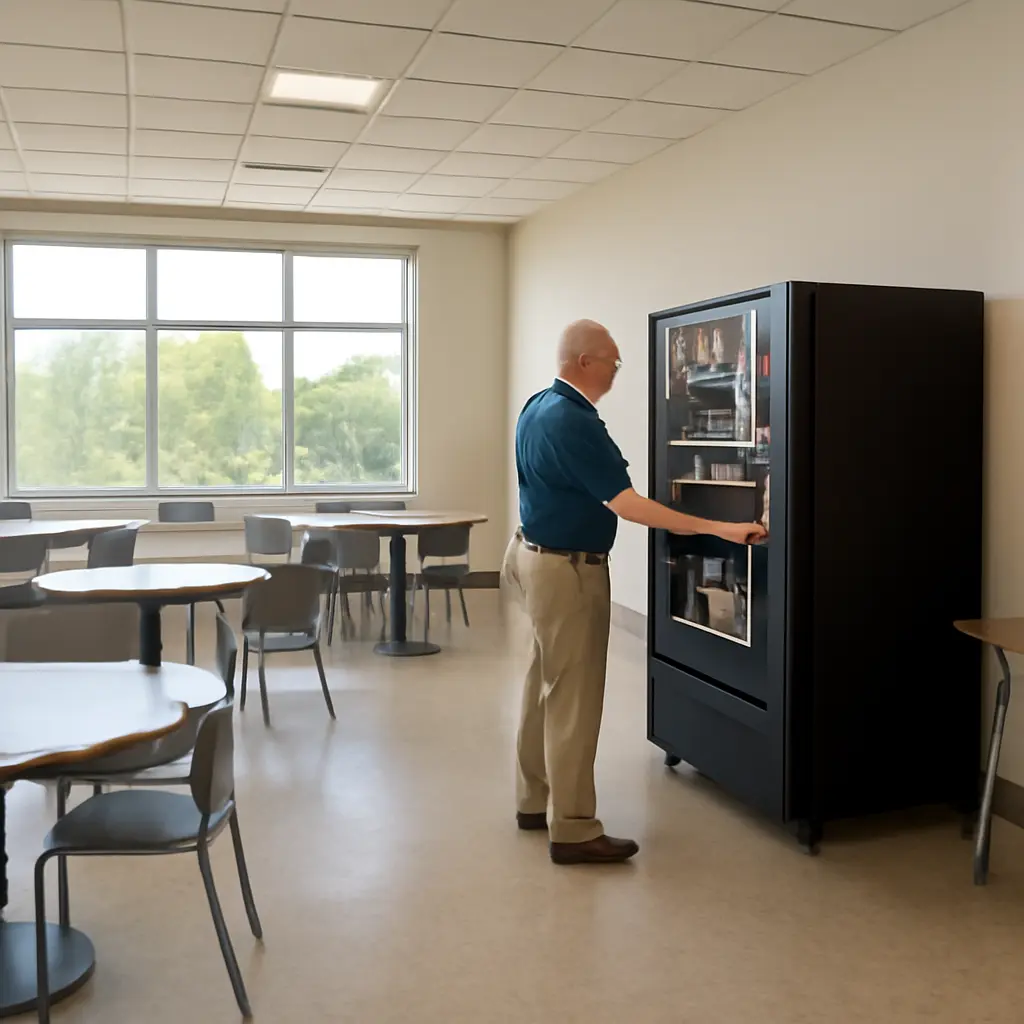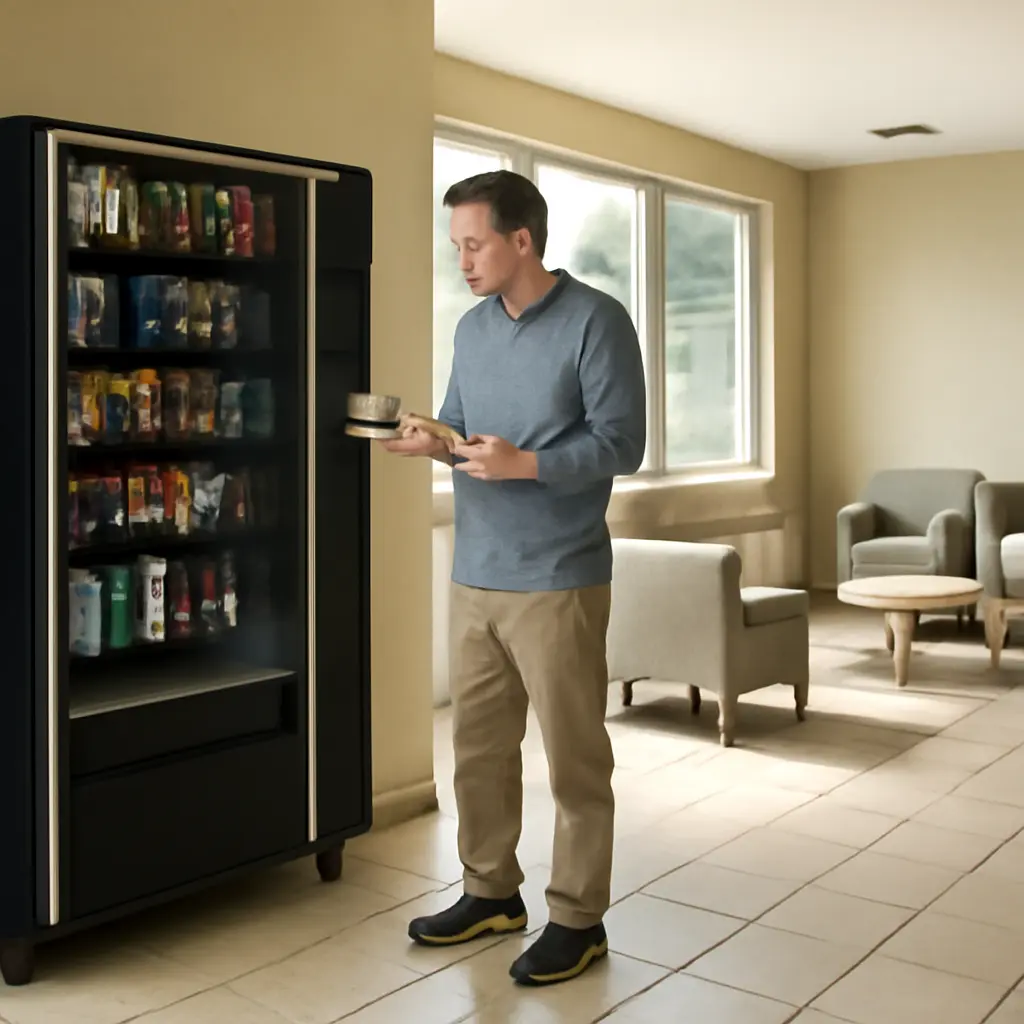
An apartment vending machine is a self-service retail unit placed in a residential building to sell snacks, drinks, or everyday essentials to residents. For buyers, the practical starting point is not choosing a machine by appearance: it is confirming resident demand, building permission, operating costs, product fit, and service requirements. The U.S. Census Bureau counted about 146 million occupied housing units in 2023, but that broad figure does not establish demand at any individual property. A sound purchase decision depends on local evidence—such as resident count, existing amenities, and likely sales—plus a realistic comparison of equipment, payment, stocking, and maintenance options.
Apartment vending machine buying starts with demand and permission
An apartment vending machine is a compact unattended retail setup intended to serve a building’s residents and, where permitted, staff or visitors. There is no single government definition or standard configuration for the term; the machine may be a traditional snack-and-drink vendor, a refrigerated market, or a smart cooler. The National Automatic Merchandising Association describes vending as automated retail through machines, while the U.S. Food and Drug Administration’s Food Code provides a regulatory framework relevant to food retail and food vending. Buyers should therefore define the specific service they intend to offer before comparing equipment.
The first filter is whether the location can support a convenient, dependable service. A building with many residents may still produce weak sales if a staffed convenience store is nearby, residents do not want the proposed products, or the machine is hidden in a low-traffic area. Conversely, a smaller property may have a useful niche when it has limited late-night access to essentials. Treat population, foot traffic, and resident feedback as local decision inputs, not as guarantees of profitability.
Validate the site before buying equipment
Site validation means checking access, visibility, utilities, safety, and written approval before committing to a machine. Ask the property owner or manager whether installation is allowed, who pays for electricity, what insurance is required, and who is responsible for damage, cleaning, refunds, and removal. Confirm the proposed location has an appropriate power supply and, for refrigerated equipment, suitable ventilation and temperature conditions. Measure doorways, elevators, corridors, and the final installation area so delivery does not become an avoidable cost.
The U.S. Access Board’s accessibility standards address routes, clear floor space, and reach ranges for accessible facilities and elements. Their application depends on the building, project, and applicable law, so buyers should have the property manager or a qualified professional assess the planned placement rather than assume a machine is compliant. The same site review should consider camera coverage, lighting, resident circulation, and whether restocking can happen without blocking exits or accessible routes.
Estimate demand with a small, testable product plan
Demand estimation is a practical forecast based on the residents who can readily use the machine, their likely purchase occasions, and the alternatives nearby. Speak with management and residents, review amenity use where available, and test interest in a short list of products. Include different needs—such as drinks, snacks, and basic household items—only when the building’s preferences and the machine format support them. Avoid using national vending-industry totals as a substitute for property-level evidence.
A simple pilot can reduce uncertainty: begin with a limited assortment, record sales and stockouts, and review results after an agreed trial period. Track sales by item, spoilage or expired goods, payment failures, refunds, and restocking time. The U.S. Department of Agriculture’s FoodKeeper resources provide storage guidance for many foods, but they do not replace product-label instructions or applicable food-safety rules.
Apartment vending machine formats match different building needs
Once the site and demand case are credible, the next decision is machine format. The main categories include conventional snack-and-drink machines, refrigerated combination machines, smart coolers or micro-markets, and smaller specialty units. Each differs in product capacity, required space, temperature control, payment technology, inventory visibility, and operating workload. Comparing them by total operating fit is more useful than selecting on purchase price alone.
Traditional snack and beverage machines
Traditional machines dispense packaged products from coils, trays, or selection mechanisms and are generally suited to a defined assortment of shelf-stable snacks and drinks. They can be a straightforward option when space is limited and residents want familiar, individually packaged products. Buyers should verify that the machine handles the sizes and shapes of the intended products, offers a clear vend and refund process, and can be serviced locally.
A machine’s stated capacity does not equal expected sales or profit. Ask vendors for the usable capacity with the actual product mix, the dimensions and weight of the unit, energy-use information, warranty terms, and parts availability. If the machine will be placed in a shared residential area, also ask about noise, lighting, anchoring, and how it handles a failed vend.
Refrigerated combination machines
A refrigerated combination machine offers chilled beverages or foods alongside other products, making it useful where residents want cold drinks or perishable convenience items. Its refrigeration system adds operating and maintenance considerations: the buyer needs to understand temperature monitoring, cleaning, service response, and what happens to inventory during a power or cooling failure. For food products requiring temperature control, follow product labeling and applicable local health requirements.
The FDA Food Code is a model used by state and local authorities as a basis for food-safety rules; adoption and requirements vary by jurisdiction. Before selling prepared or temperature-sensitive foods, ask the local health department which permits, equipment standards, and handling rules apply. Packaged shelf-stable products may present a different compliance profile from refrigerated foods, so confirm the details rather than relying on a machine supplier’s general assurances.
Smart coolers and micro-markets
A smart cooler or micro-market uses technology such as access control, cameras, scales, or app-based checkout to offer a more open selection than a conventional vending mechanism. These formats may suit a property seeking fresh food or broader household essentials, but they typically require a clear process for user access, payment, inventory reconciliation, and loss prevention. Buyers should ask how the provider handles outages, disputed charges, privacy, and refunds.
The Federal Trade Commission’s guidance on protecting personal information is relevant when a service collects account, payment, or usage data. Ask vendors what data the system collects, how long it is retained, who can access it, and what security practices apply. A connected machine can provide useful sales reporting, but the value depends on whether the information is accurate, understandable, and available to the buyer.
Apartment vending machine costs depend on the full operating model
The purchase price is only one component of cost. A realistic budget includes equipment or lease payments, delivery and installation, payment processing, inventory, electricity, repairs, insurance, permits where required, and the labor or service contract needed to keep the machine stocked. Compare these costs against expected gross sales and product margins, while accounting for spoilage, shrink, payment fees, and periods of low demand.
Purchase, lease, or managed service
Buying gives the operator greater control over equipment and assortment but also places responsibility for maintenance, stocking, and repairs on the buyer. Leasing can reduce upfront spending, though contract length, service charges, and early termination terms matter. A managed vending service may handle equipment and replenishment in exchange for a commission, revenue share, or other agreement; the building should clarify who owns the machine and inventory and how sales are reported.
Request written, comparable proposals. Check warranty duration, exclusions, response times, replacement-part availability, software fees, payment processing rates, and any minimum sales or exclusivity clauses. The Federal Trade Commission advises consumers to review contract terms carefully; for a commercial installation, have the property’s authorized representative review obligations, indemnity, insurance, and termination rights before signing.
Payment systems and accessibility
Payment options determine how residents can make purchases and how reliably transactions are recorded. Depending on the property and machine, options may include cash, contactless bank cards, mobile wallets, or a provider’s account-based system. Ask about transaction fees, offline behavior, settlement timing, chargebacks, receipts, and refunds. Ensure the interface is understandable and usable for the intended residents, and do not assume that every resident has or wants a smartphone or bank card.
If payment or account technology collects personal information, the vendor should explain its privacy and security practices in plain language. The FTC recommends limiting collection to information needed for the service and protecting information held by a business. Buyers should also confirm who is responsible for handling customer complaints and resolving incorrect charges.
Apartment vending machine operations require reliable stocking and safety
Operations turn a machine from installed equipment into a dependable resident amenity. The operator needs a replenishment schedule, a method for checking stock and expiration dates, a cleaning routine, a service contact, and a way to communicate outages. A machine that is frequently empty, dirty, or unable to process payment can undermine resident trust even if the initial product selection was popular.
Inventory, restocking, and food handling
Inventory management is the process of matching stock levels to sales while preventing avoidable waste and stockouts. Start with conservative quantities, then use sales records and resident feedback to adjust the assortment. Record product expiration dates and rotate stock using first-in, first-out practices. For foods requiring refrigeration or other special handling, follow the package instructions and the relevant state or local requirements.
The FDA Food Code offers model provisions for retail food safety, but the enforceable rules are determined by the jurisdiction. Contact the local health authority before offering fresh, prepared, or temperature-controlled food. A buyer should also establish who checks the equipment’s temperature, what corrective action is taken after a failure, and how affected inventory is removed.
Maintenance, security, and resident service
A maintenance plan identifies who responds to mechanical faults, refrigeration problems, payment issues, and property damage. Ask for a documented service process and a realistic response-time commitment, especially for refrigerated equipment. Keep a visible support contact and refund instructions near the machine, and agree with management on procedures for reporting hazards or repeated problems.
Security planning should balance protection with residents’ privacy and accessibility. Consider placement in a well-lit common area, tamper-resistant installation, and existing building security practices. If cameras or access logs are part of the system, disclose and manage them according to applicable privacy rules and building policy. The FTC’s business guidance on data security provides a useful baseline for evaluating vendors that handle payment or account data.
Apartment vending machine buying checklist supports a low-risk launch
A staged buying process helps prevent a costly mismatch between equipment and building needs. Before placing an order, document the property’s approval, the intended users, the product range, the installation constraints, and the operating responsibility. Then compare proposals against the same checklist so that purchase, lease, and service offers can be evaluated fairly.
- Confirm written permission, placement, utilities, access, insurance, and responsibility for damage or removal.
- Validate resident interest and nearby alternatives; identify a focused initial assortment.
- Measure the route and installation space, and check accessibility, electrical needs, and ventilation.
- Compare machine formats, usable capacity, warranties, service availability, and energy information.
- Calculate total costs, including inventory, payment fees, delivery, repairs, labor, and permits if applicable.
- Review food-safety, privacy, payment, and contract requirements with the relevant authorities and property representatives.
- Set a pilot period and track sales, stockouts, waste, service calls, refunds, and resident feedback.
For example, a property considering a refrigerated unit could first survey residents, obtain management approval, confirm local food rules, and request a trial arrangement from a service provider. During the pilot, the operator could compare sales and waste by product and record cooling or payment incidents. This kind of measured test is more informative than assuming that a machine will succeed because a building has a large resident count.
Conclusion: apartment vending machine buyers should begin with fit, not features
A practical apartment vending machine decision connects four issues: verified site demand, a format suited to residents and space, a complete cost model, and dependable operations. Traditional vendors, refrigerated units, and smart coolers serve different needs, while local accessibility, food-safety, contract, and data considerations shape what can be installed responsibly. Begin with permission and resident evidence, compare total costs, and test the service on a limited basis before expanding. Buyers can reduce risk by reviewing local requirements, asking vendors precise service and privacy questions, and measuring results against clear pilot goals.
Sources: U.S. Census Bureau, 2023 American Community Survey, Selected Housing Characteristics, https://data.census.gov/; National Automatic Merchandising Association, Vending and unattended retail industry resources, https://www.namanow.org/; U.S. Access Board, Guide to the ADA Accessibility Standards, https://www.access-board.gov/ada/guides/; U.S. Food and Drug Administration, Food Code, https://www.fda.gov/food/fda-food-code/food-code-2022; U.S. Department of Agriculture, FoodKeeper App, https://www.foodsafety.gov/keep-food-safe/foodkeeper-app; Federal Trade Commission, Protecting Personal Information: A Guide for Business, https://www.ftc.gov/business-guidance/resources/protecting-personal-information-guide-business; Federal Trade Commission, Consumer Advice on contracts and agreements, https://consumer.ftc.gov/