
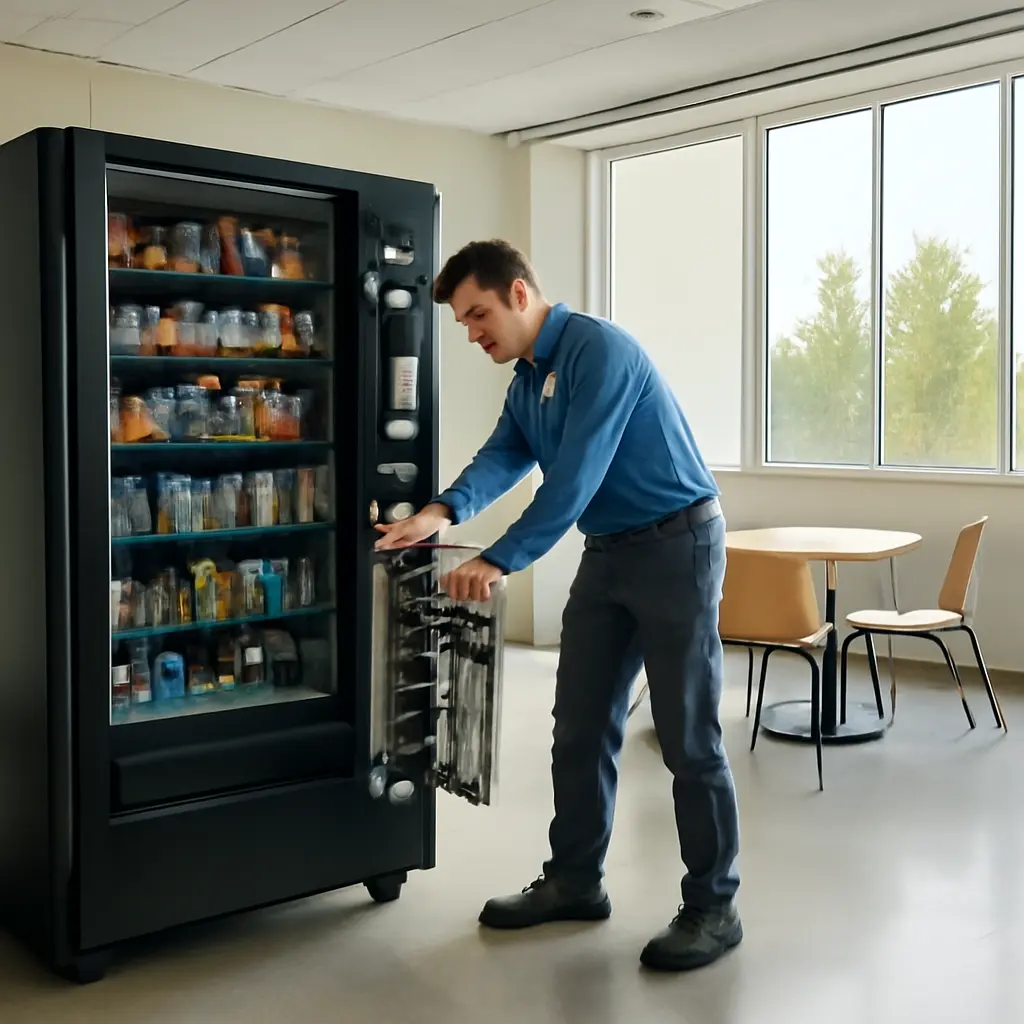
A vending machine combines a physical dispensing system with electrical and electronic controls that accept payment, track inventory, and authorize a purchase. When it stops working, the cause may be mechanical—such as a jammed delivery mechanism—or electronic, such as a failed sensor, power supply, or control board. Distinguishing between the two helps technicians diagnose faults faster, avoid unnecessary part replacements, and restore service safely. The U.S. Bureau of Labor Statistics describes vending-machine servicing as a job involving inspection, repair, and maintenance of machines; however, there is no widely applicable public dataset assigning a single percentage of breakdowns to mechanical versus electronic faults. This guide explains the distinction, common symptoms, diagnostic steps, repair priorities, and preventive maintenance.
Vending Machine Repair Breakdown: Mechanical and Electronic Faults
A repair breakdown is a structured diagnosis of a machine fault, its likely cause, and the corrective work needed to return the equipment to safe operation. The U.S. Occupational Safety and Health Administration (OSHA) emphasizes controlling hazardous energy during servicing, while equipment manufacturers’ manuals provide machine-specific troubleshooting procedures. In practice, technicians classify symptoms as mechanical, electrical, electronic, or mixed rather than assuming that every failed vend has one isolated cause.
Mechanical faults affect movement, alignment, or physical delivery. Electrical faults involve power or wiring. Electronic faults affect sensors, payment devices, logic, or communications. These categories overlap: a worn motor can draw excessive current, a misaligned sensor can falsely report a jam, and a control board can command a mechanically obstructed delivery column. The distinction is useful because each category calls for different tests and safety precautions.
Mechanical breakdowns
A mechanical breakdown is a failure of a physical component or movement path. Typical examples include a bent product coil, broken belt, damaged gear, jammed elevator, loose linkage, misaligned door, or blocked chute. In a snack machine, a product can catch on a spiral or fall incorrectly; in a refrigerated machine, a drawer or delivery gate may bind. These failures often produce audible grinding, visible obstruction, inconsistent delivery, or a motor that starts but cannot complete its movement.
Mechanical problems may be intermittent. Product size, packaging, loading position, vibration, and wear can all change whether a selection vends successfully. The operator should compare the affected column with neighboring columns and inspect for obstructions without forcing gears or moving parts. A jam that recurs after clearing may indicate damaged parts, incorrect loading, or a motor or sensor issue rather than a one-time blockage.
Electrical and electronic breakdowns
Electrical faults interrupt or distort the supply of power; electronic faults involve the devices that interpret signals and control machine functions. Electrical examples include a tripped breaker, damaged cord, loose connector, failed fuse, or unstable supply. Electronic examples include a faulty control board, coin or bill validator, card reader, temperature sensor, display, or communication module. A blank display may point to a power problem, but it can also result from a failed board or internal connection, so the symptom alone does not establish the cause.
The National Electrical Code, published by the National Fire Protection Association, is a key U.S. reference for electrical installation safety; the precise requirements depend on the location and machine installation. Technicians should use the machine’s service documentation and appropriate electrical test equipment. Owners and untrained staff should not open energized compartments, bypass safety devices, or probe live circuits.
Symptoms That Separate Mechanical Problems from Electronics
A symptom is an observable behavior, not a final diagnosis. The most reliable initial assessment compares what the machine displays, what the payment system does, and what the physical mechanism attempts to do. Recording the selection, time, error message, and outcome gives a technician useful evidence and can reveal whether the failure is isolated or affects the whole machine.
Signs that suggest a mechanical fault
A motor sound without product delivery, repeated jams in one column, scraping or clicking, and a product lodged in the delivery area commonly suggest a mechanical issue. A single selection failing while others work also points toward a localized column, linkage, or delivery mechanism fault. These clues are not conclusive: a defective motor driver or position sensor can imitate a mechanical jam.
Signs that suggest an electrical or electronic fault
A dark display, repeated rebooting, payment acceptance followed by no response, widespread selection failures, or an error code affecting multiple functions can indicate a power, board, or communications problem. A payment device that rejects all transactions may have a reader fault, network interruption, configuration issue, or payment-provider outage. Confirm whether other machine functions remain available before replacing a component.
Mixed faults and misleading symptoms
A mixed fault involves more than one system or a fault whose symptoms cross categories. For example, a jammed mechanism may trigger an electronic error code, while a loose connector may make a motor appear defective. Refrigerated vending machines add another interaction: a door seal or airflow obstruction can cause temperature alarms even when the controller is operating correctly. A sound diagnosis tests the physical path and the relevant electrical signals instead of relying on a code or symptom in isolation.
A Safe Diagnostic Process for Vending Machine Repair
A consistent diagnostic sequence reduces guesswork and limits risk. OSHA’s control-of-hazardous-energy standard, commonly called the lockout/tagout standard, requires procedures to prevent unexpected energization during covered servicing. Its application depends on the work and workplace, but the safety principle is clear: isolate hazardous energy before accessing parts that could move or become energized.
- Document the complaint, selection number, error code, payment behavior, and whether the failure affects one product or the whole machine.
- Check simple external conditions, such as whether the machine has power, whether a breaker has tripped, and whether an obvious obstruction is present. Do not repeatedly reset a breaker that trips again.
- Follow the manufacturer’s service manual and isolate power before inspecting internal moving parts or electrical compartments, as appropriate to the task.
- Inspect the physical delivery path for jams, worn parts, loose fasteners, misalignment, and improper loading. Avoid forcing a mechanism.
- Use qualified personnel and suitable instruments to test wiring, fuses, motors, sensors, power supplies, and control signals.
- After repair, restore guards and covers, clear tools, reconnect power according to procedure, and test the affected function and related safety features.
This sequence is a troubleshooting framework, not a substitute for model-specific instructions. A technician should consult the manufacturer’s error-code list and wiring diagrams, especially where machines use proprietary controls or remote monitoring.
Repair Priorities, Costs, and Preventive Maintenance
Repair priority depends on safety, service impact, and the likelihood of further damage. A machine with exposed wiring, overheating, a burning odor, or repeated breaker trips should be taken out of service and assessed by a qualified technician. A single failed selection may be less urgent, but it still affects customer experience and can cause refunds or lost sales. Cost varies by model, location, part availability, labor, and whether diagnosis identifies a simple obstruction or a major board or refrigeration failure; a universal repair-cost figure would be misleading.
Preventive care for mechanical systems
Preventive maintenance is planned inspection and servicing intended to reduce failures before they interrupt operation. Operators can keep products correctly loaded, remove debris from delivery areas, check for loose or bent components, and report recurring jams. Technicians can inspect wear points and verify alignment according to the manufacturer’s schedule. Cleaning methods should match the machine’s materials and food-safety requirements; liquids should not be introduced into electrical assemblies.
Preventive care for electronics and power
Electronic maintenance includes checking connectors, inspecting cables for damage, confirming payment-device operation, and reviewing error histories or remote alerts where available. Protect the machine from moisture, excessive heat, and unsuitable power conditions. Firmware or configuration changes should follow vendor guidance because an incorrect update can interrupt payments or machine controls. Operators should record recurring faults rather than clearing the same alarm repeatedly without investigation.
Using service records to improve reliability
A service log connects symptoms to repairs over time. Record the date, machine identifier, affected selection, error code, suspected cause, replaced parts, and outcome. If the same column repeatedly jams, the record can reveal a loading or wear pattern. If multiple machines lose payment connectivity together, the evidence may point to a network or service-provider issue rather than simultaneous reader failures. This practical data is often more useful for an individual operator than broad industry averages.
Conclusion: Match the Repair to the Failure
Vending machine repair is most effective when mechanical, electrical, and electronic faults are treated as related but distinct possibilities. Mechanical problems commonly involve jams, wear, alignment, or failed movement; electrical and electronic problems involve power, wiring, sensors, payment devices, and control logic. Because one system can imitate a fault in another, technicians should combine symptom records, safe inspection, and model-specific testing rather than replace parts by guesswork.
For operators, the practical next step is to document recurring symptoms, take unsafe machines out of service, and arrange qualified diagnosis when internal electrical or moving components are involved. Regular cleaning, correct loading, and maintenance records can help identify patterns early. For deeper guidance, consult the machine manufacturer’s service manual, OSHA’s hazardous-energy requirements, and applicable electrical safety rules.
Sources: U.S. Bureau of Labor Statistics, Vending Machine Servicers and Repairers, https://www.bls.gov/oes/current/oes499094.htm; Occupational Safety and Health Administration, The Control of Hazardous Energy (Lockout/Tagout), https://www.osha.gov/control-hazardous-energy; National Fire Protection Association, NFPA 70: National Electrical Code, https://www.nfpa.org/codes-and-standards/nfpa-70-standard-development/70; U.S. Occupational Safety and Health Administration, 29 CFR 1910.147—The Control of Hazardous Energy, https://www.osha.gov/laws-regs/regulations/standardnumber/1910/1910.147.


