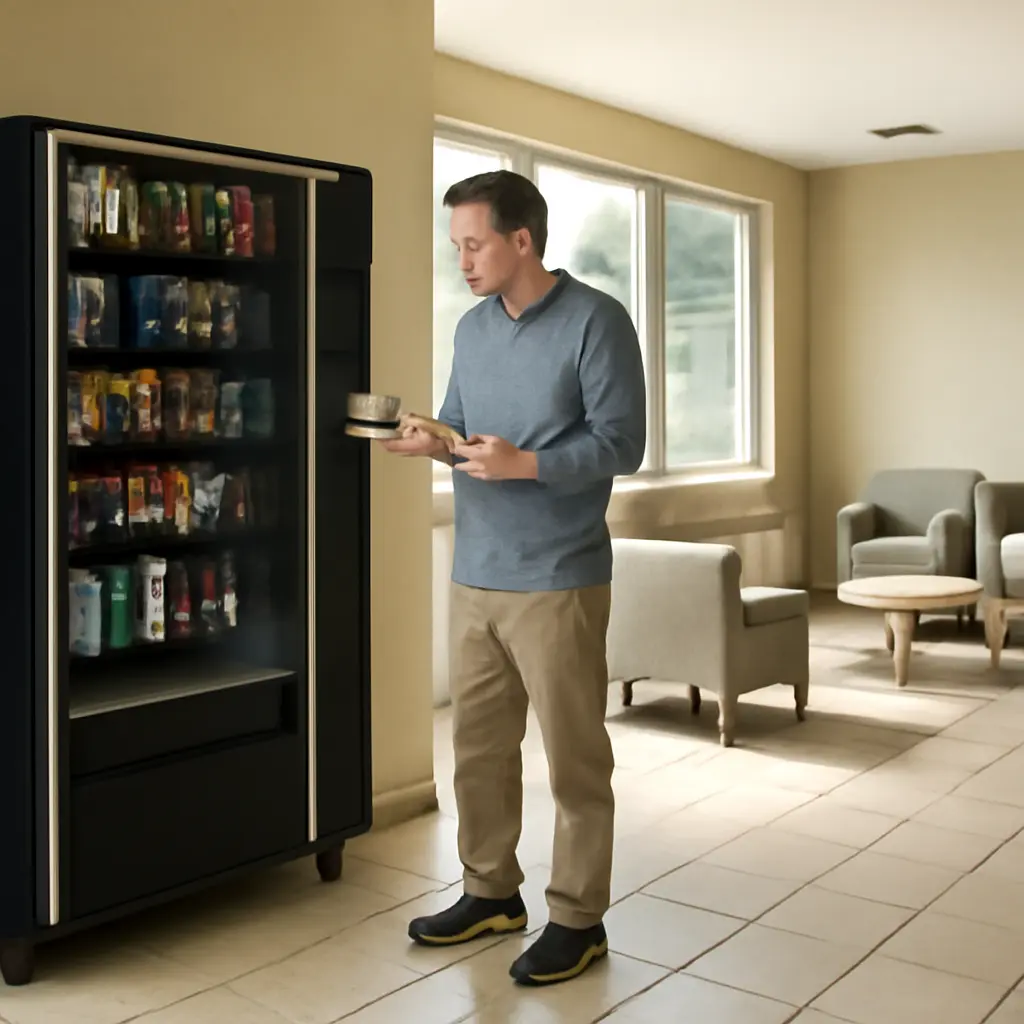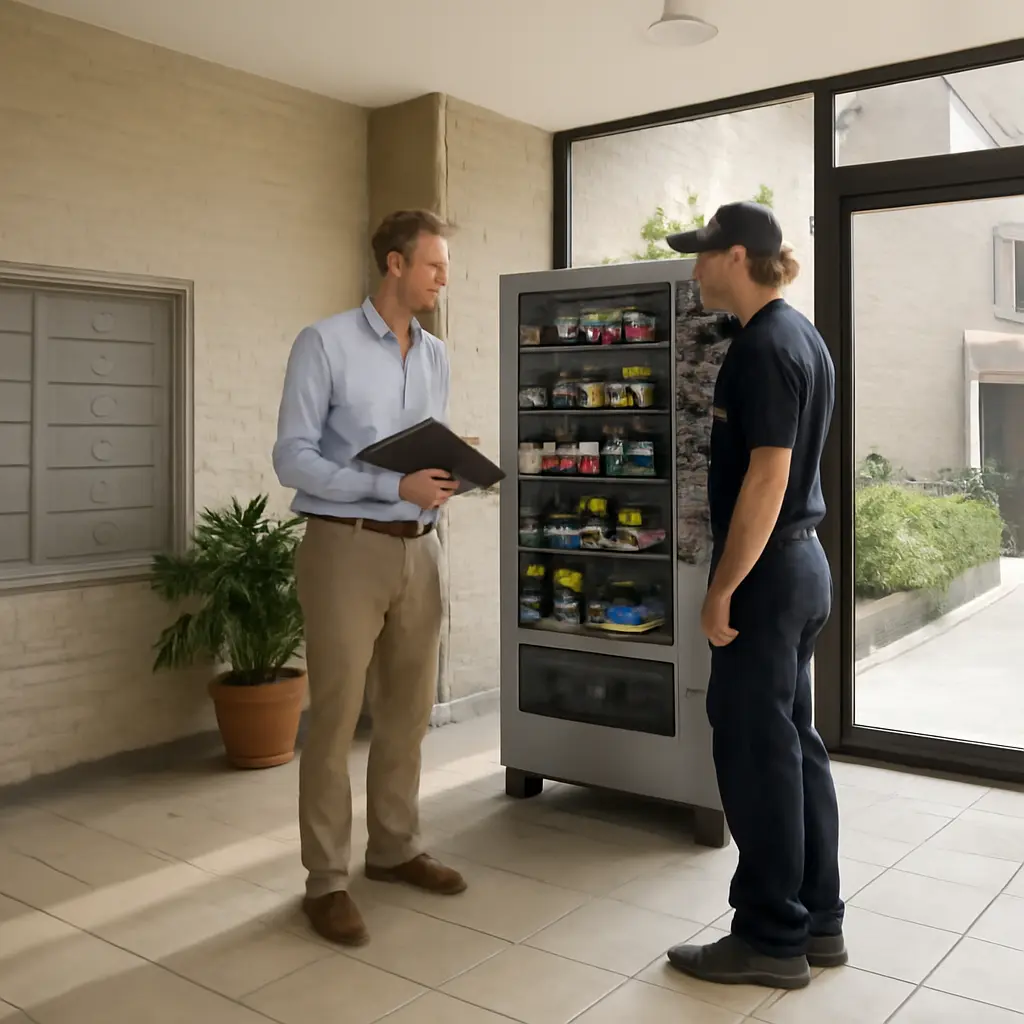
Vending machines in apartment buildings can provide convenient access to snacks, drinks, and everyday essentials, but a successful installation takes more than finding an empty corner. Common mistakes include skipping landlord and local approvals, overlooking accessibility and fire-safety requirements, choosing an unsuitable location, and failing to plan for deliveries, maintenance, and resident privacy. These issues matter: the U.S. Access Board’s ADA standards specify accessible routes and clear floor space, while fire codes and building rules can restrict equipment in corridors and exit paths. Treating installation as a small facilities project—with approvals, a site assessment, resident input, and a written operating plan—helps prevent costly problems.
Installation planning and apartment vending machine placement
An apartment vending-machine installation is the process of selecting, approving, placing, connecting, and operating automated retail equipment in a shared residential property. There is no single national rule that approves every machine or location: building ownership, local building and fire codes, accessibility requirements, electrical conditions, and food-safety rules may all affect the project. The National Apartment Association’s guidance on property operations emphasizes that shared amenities need to be managed as part of the property’s overall service and risk-management practices.
The main installation types are snack and beverage machines, refrigerated or fresh-food machines, and micro-markets or smart coolers. Each has different space, power, security, replenishment, and sanitation needs. A compact snack machine may fit near a lounge, while a refrigerated unit may require a suitable electrical circuit, ventilation clearance, and a more frequent restocking and temperature-check routine.
Mistake: choosing a location before checking building rules
A convenient-looking spot is not automatically an approved one. Placing equipment in a corridor, lobby, laundry room, or other common area without written authorization can conflict with the lease, condominium rules, fire-safety requirements, or insurance conditions. The International Fire Code and locally adopted fire codes generally require exit access and egress paths to remain usable; a machine, its open door, or a queue of customers should not obstruct them.
Before selecting a location, obtain written approval from the owner or property manager and ask the local building or fire official whether permits or inspections apply. Confirm who is responsible for damage, utility costs, theft, and removal if the arrangement ends. A practical site review should consider visibility, lighting, resident traffic, noise, delivery access, and whether the machine can be serviced without blocking doors or circulation routes.
Mistake: overlooking accessibility and safe circulation
Accessibility means residents with disabilities can reach and use the machine and move through the surrounding space. The U.S. Access Board’s ADA Standards for Accessible Design address accessible routes, clear floor or ground space, and reach ranges for operable parts. Applicable requirements depend on the building, the machine, and the scope of work, so property managers should verify the relevant standards rather than assume that an existing common area is compliant.
Measure the approach and operating area, including space for a wheelchair user to position in front of the controls. Check that payment terminals, product selections, and pickup openings can be reached and operated as required. Also assess whether doors, carts, or people waiting to buy items would narrow the route. If the proposed position cannot support accessible use and safe passage, choose another location or consult a qualified accessibility professional.
Mistake: assuming the floor, power, and ventilation are adequate
A vending machine can be heavy, and refrigeration adds continuous electrical demand and heat. Installing it without checking the floor, outlet, circuit capacity, ventilation clearance, and manufacturer’s installation instructions can cause equipment failure or create safety concerns. The U.S. Consumer Product Safety Commission advises consumers to use electrical products according to manufacturer instructions and avoid unsafe electrical setups; property staff should have a qualified electrician assess new or uncertain connections.
Ask the vendor for the machine’s dimensions, operating weight, electrical specifications, heat output, and clearance requirements before delivery. Do not rely on extension cords or power strips as a substitute for an appropriate permanent connection. Where a refrigerated machine sells potentially hazardous foods, the operator should also establish temperature monitoring and follow applicable local food codes; the FDA Food Code is a model used by jurisdictions, not a universal substitute for local rules.
Operations and resident experience for apartment vending machines
Once a location is approved, operational design determines whether the machine remains useful and dependable. The key decisions include product selection, payment methods, replenishment frequency, cleaning, repairs, complaint handling, and data practices. These considerations connect the physical installation to the day-to-day experience of residents and property staff.
Mistake: choosing products without resident input
A machine stocked around the operator’s assumptions may have low sales and frustrate residents. A short survey or trial period can reveal demand for drinks, snacks, household basics, or healthier options, as well as dietary and cultural preferences. The Centers for Disease Control and Prevention’s guidance on healthier food environments supports making nutritious choices available; for apartment operators, that can mean offering water and lower-sugar options alongside conventional products rather than relying on a narrow selection.
Start with a limited assortment, review sales and stockouts, and invite feedback after launch. Label prices clearly, disclose any age restrictions where relevant, and check expiration dates during every restocking visit. For fresh or refrigerated items, create a documented process for temperature checks, product rotation, and removal of unsafe or expired stock.
Mistake: failing to plan deliveries, cleaning, and repairs
A machine that is empty, dirty, jammed, or out of order quickly becomes a source of complaints. The operating agreement should specify who fills it, how often, how residents report problems, and how quickly the vendor responds. It should also set expectations for cleaning touchpoints, removing packaging, controlling spills, and keeping deliveries away from peak traffic or quiet hours.
A useful service plan records the machine’s condition, stock levels, temperature readings where applicable, and repair requests. Assign one property contact to coordinate with the vendor, but avoid making leasing or maintenance staff informal round-the-clock support for a service they do not control. Include a clear escalation process for leaks, electrical problems, pest concerns, or repeated outages.
Mistake: neglecting payment access, privacy, and security
Cashless payment can be convenient, but a machine that accepts only one payment method may exclude residents or visitors who cannot use it. Confirm which cards, mobile wallets, or cash options are supported, how refunds work, and who handles payment disputes. The Federal Trade Commission recommends that organizations limit collection of personal information and protect data they retain; operators should ask vendors what transaction data is collected, how long it is kept, and who can access it.
Security planning should balance visibility with privacy. Locate the machine in a well-lit, appropriate common area without creating blind spots or pointing a camera into private spaces. If cameras or connected sensors are used, disclose them according to applicable law and building policy. The vendor agreement should assign responsibility for payment security, software updates, incident reporting, and equipment tampering.
Mistake: leaving responsibilities and costs vague
Unclear agreements often lead to disputes over electricity, commissions, insurance, damage, refunds, and removal. A written contract should identify the machine owner and operator, approved location, access hours, utility arrangements, service standards, indemnity and insurance terms, data responsibilities, and termination process. Property managers should also clarify whether residents are charged directly by the vendor and whether the building receives any commission or pays a fee.
For example, a machine placed beside a laundry room may appear convenient but can obstruct carts, create queues, or interfere with cleaning. A pre-installation walk-through with maintenance staff, the vendor, and a resident representative can catch these conflicts before delivery. A short pilot—paired with complaint tracking, sales data, and a scheduled review—allows the property to adjust the location or product mix before committing long term.
Conclusion: install apartment vending machines as managed amenities
The most common apartment vending-machine mistakes are approving a location too casually, overlooking accessible circulation and building safety, failing to verify power and equipment requirements, and neglecting restocking, hygiene, payment, privacy, and contract terms. An installation is most likely to succeed when the property first checks local requirements, measures the site, consults residents, and assigns clear operational responsibilities.
Before ordering equipment, complete a written site checklist and review the plan with the property manager, vendor, and relevant local authorities. For further guidance, consult the applicable local building and fire codes, the U.S. Access Board’s ADA standards, and local health-department requirements for food sales. These steps help turn a machine from a potential obstruction or maintenance burden into a safe, accessible, and useful resident amenity.
Sources: U.S. Access Board, 2010 ADA Standards for Accessible Design, https://www.access-board.gov/ada/; International Code Council, International Fire Code, https://codes.iccsafe.org/content/IFC2021P1; U.S. Food and Drug Administration, Food Code 2022, https://www.fda.gov/food/fda-food-code/food-code-2022; U.S. Consumer Product Safety Commission, Electrical Safety, https://www.cpsc.gov/Safety-Education/Safety-Guides/Home/Electrical-Safety; Centers for Disease Control and Prevention, Healthy Food Environments, https://www.cdc.gov/nutrition/php/healthy-food-environments/; Federal Trade Commission, Protecting Personal Information: A Guide for Business, https://www.ftc.gov/business-guidance/resources/protecting-personal-information-guide-business; National Apartment Association, Apartmentalize and Industry Resources, https://www.naahq.org/