Full-size vending machines are hard to place because they need more than an open corner: they require sufficient floor space, safe access, reliable power, suitable customer traffic, and permission from the property owner. The strongest placements match the machine’s footprint and product mix to a predictable audience—such as employees in a break room, students in a residence hall, or travelers in a waiting area—then validate the choice with a site survey and sales data. That approach matters in a market where the U.S. Bureau of Labor Statistics counted about 1.7 million workers in retail salespersons and vending-machine-related occupations in 2023, while the National Automatic Merchandising Association (NAMA) describes vending as a substantial part of the convenience-services industry. The sections below explain the placement constraints, compare promising venue types, and outline how to assess and improve a location.
Placement requirements shape full-size vending machine location decisions
A full-size vending machine is a self-service retail unit with a comparatively large cabinet, typically holding multiple product selections and requiring a dedicated installation area. There is no single industry-wide dimension that defines “full-size”; cabinet size, capacity, and weight vary by model. The U.S. Access Board’s accessibility standards provide a useful planning reference: accessible sales and service elements must allow an approach and operation by people with disabilities, while building and fire rules may impose additional clearance and egress requirements. In practical terms, placement means choosing and preparing a site so the machine can be delivered, used, restocked, and serviced without obstructing people or building operations.
Operators should assess a location as a system rather than as an empty patch of floor. The core factors are available space, customer flow, demand timing, power and communications, security, replenishment access, and the commercial agreement with the property owner. A high-traffic address is not automatically a good site: people must be able to notice, approach, and use the machine, and the expected sales must justify rent, commissions, inventory, and service costs.
Footprint, access, and building clearances
The machine’s footprint is the floor area occupied by its cabinet, but the usable placement area must also accommodate customer approach, door or service-panel movement, delivery, and restocking. Measure the full route from the loading entrance to the proposed site, including elevator doors, corridors, thresholds, and turns. Check the manufacturer’s installation requirements and confirm that the location does not reduce an accessible route, block an exit, interfere with a fire-protection device, or create a trip hazard. The U.S. Access Board’s ADA standards set a 36-inch minimum clear width for many accessible routes, subject to specified exceptions; local codes and the actual building layout may require more.
Utilities, connectivity, and operating conditions
A site must provide the utilities and environmental conditions required by the equipment. Confirm voltage, outlet location, grounding, and whether the machine needs a dedicated circuit; refrigerated models also need adequate ventilation and must operate within the manufacturer’s temperature limits. Cashless payment systems may rely on cellular or Wi-Fi connectivity, so signal strength should be tested where the machine will stand. The U.S. Department of Energy notes that commercial refrigeration equipment consumes energy to maintain chilled temperatures, making heat exposure, ventilation, and door-opening frequency relevant to operating cost as well as product quality.
Demand, visibility, and commercial feasibility
A viable site has a reachable audience with a reason to buy at the times the machine is available. Count people passing the proposed location during different shifts or days, identify nearby alternatives such as cafeterias and convenience stores, and compare the machine’s products with the audience’s needs. The U.S. Small Business Administration recommends evaluating market demand, location, competition, and pricing when assessing a business opportunity; those same fundamentals apply to vending. Before installation, estimate gross sales and subtract product cost, payment-processing fees, commissions or rent, utilities, spoilage, and service visits to see whether the site can sustain the machine.
Venue types determine where full-size vending machines work best
Once a site meets physical and operational requirements, venue type helps predict who will use the machine and when. The most promising placements usually combine repeat visitors, limited nearby alternatives, and a reason for people to remain on-site. These patterns point to several practical site categories, but local observation and a trial period are still needed because traffic alone cannot guarantee sales.
Workplaces and industrial facilities
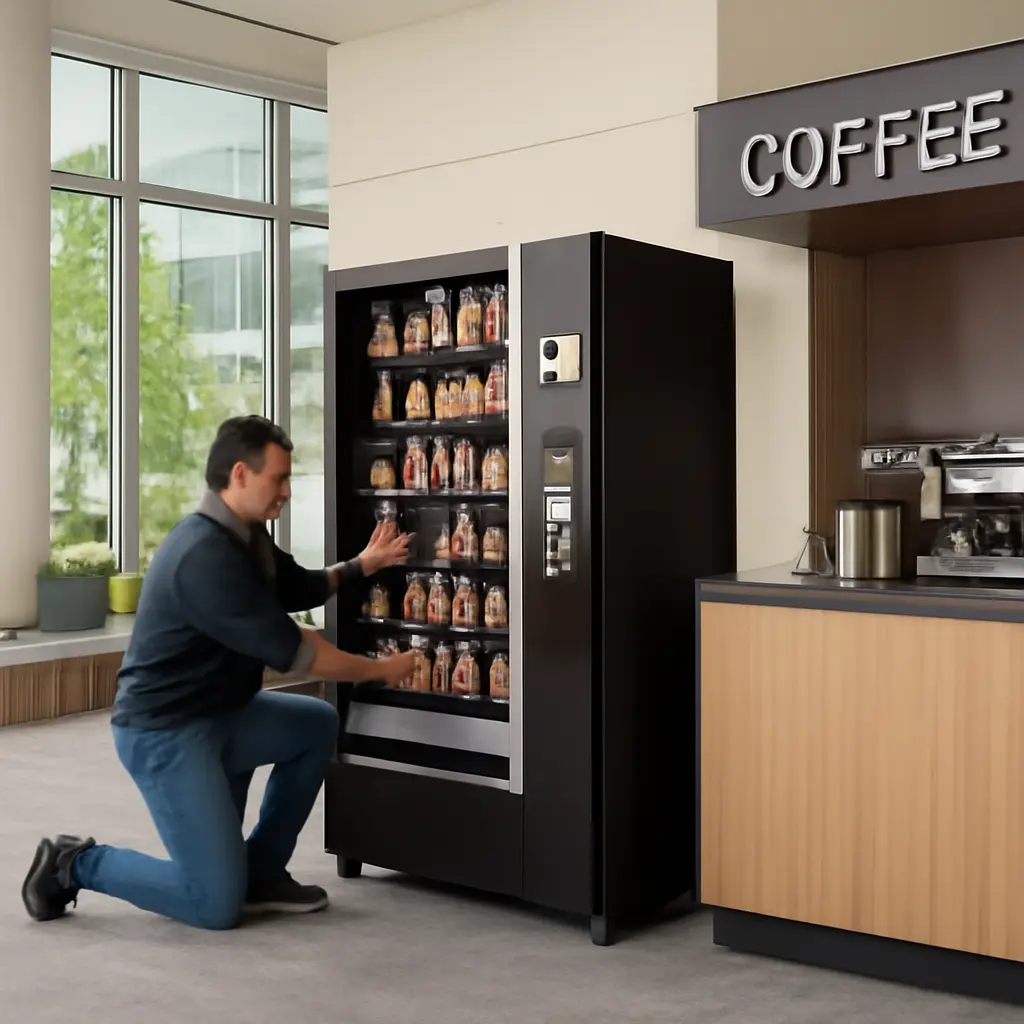
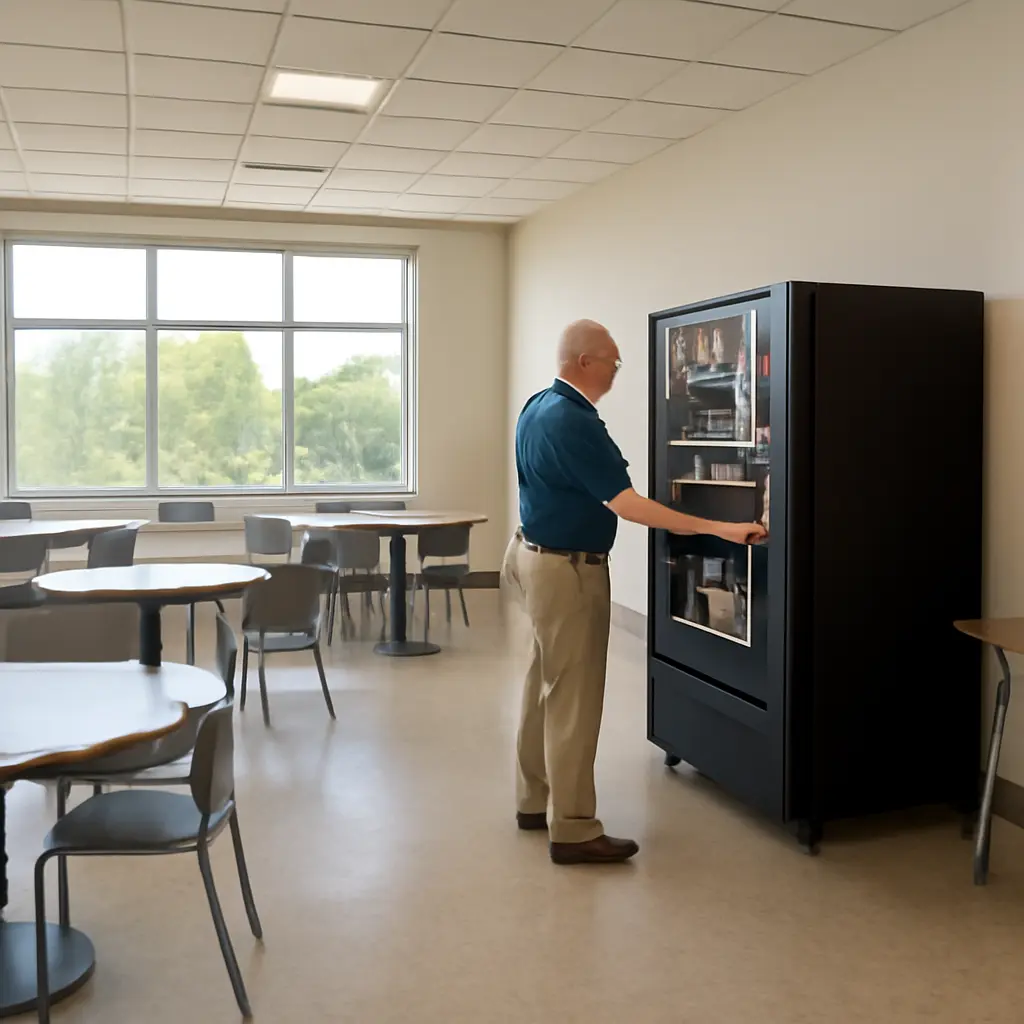
Workplaces can support dependable demand because employees return regularly and may need snacks, drinks, or essentials during breaks and off-hours. Manufacturing sites, hospitals, distribution centers, and large offices may be especially suitable where shifts extend beyond cafeteria hours. Place machines near break rooms or common areas—not inside narrow corridors—and coordinate with facilities and human-resources teams on product selection, allergens, nutrition policies, employee access, and cleaning. A pilot can compare transactions by shift and reveal whether the product mix should change for overnight or weekend workers.
Schools, colleges, and student housing
Educational settings offer recurring foot traffic, but they also impose stronger rules on product eligibility, operating hours, supervision, and procurement. In the United States, the U.S. Department of Agriculture’s Smart Snacks in School standards apply to foods and beverages sold to students on campus during the school day, including vending sales covered by the rules. Colleges and universities may set their own nutrition, sustainability, and contract requirements. Confirm the applicable policy before selecting products or negotiating placement, and favor accessible common areas that do not disrupt classrooms or emergency routes.
Healthcare, hospitality, and residential settings
Hospitals, hotels, apartment buildings, and other residential properties can benefit from vending when users need convenient access outside staffed retail hours. Demand may include drinks and snacks, but some properties may also support personal-care products, travel necessities, or other approved items. These sites require careful coordination: healthcare operators may have infection-control and nutrition policies, while hotels and residential managers may restrict access, noise, signage, or delivery times. In each case, place the machine where users can find it without compromising privacy, circulation, or staff workflows.
Transit hubs and public venues
Stations, terminals, recreation facilities, and event venues can expose a machine to high volumes of potential customers, but traffic may be uneven and access tightly controlled. Travelers may value quick purchases, while event visitors create short-lived peaks that require more frequent replenishment. Before committing, verify procurement rules, security screening, operating permits, insurance, and any concession agreement. Measure footfall at the exact proposed position rather than relying on total venue attendance: a machine hidden behind a queue or outside the natural passenger route may capture little of the audience.
Site surveys and pilots validate full-size vending machine placement
A site survey converts a promising address into an evidence-based placement decision. It should record dimensions, access, utilities, visibility, audience patterns, competing food options, safety constraints, and the commercial terms required by the property. A short pilot then tests whether the assumptions hold under real operating conditions. This progression reduces the risk of paying for a location that looks attractive but proves difficult to service or too weak in sales.
Use a repeatable site checklist
Before approving a site, document the following information and obtain written confirmation from the responsible property contact:
- Machine dimensions, delivery route, installation access, and required clearances.
- Accessible approach, unobstructed exits, fire-safety requirements, and local building-code conditions.
- Electrical supply, ventilation, connectivity, lighting, and any refrigeration requirements.
- People counts by hour, shift, weekday, and weekend, plus nearby competing options.
- Restocking frequency, storage access, waste handling, cleaning responsibilities, and service response expectations.
- Rent or commission, contract duration, insurance, permits, product restrictions, and termination terms.
Measure performance after installation
Track sales by item and time period, stockouts, spoilage, refunds, payment failures, service visits, and customer feedback. Compare results with a baseline that reflects the site’s operating schedule and seasonal patterns. A machine with frequent stockouts may signal underestimated demand or poor replenishment planning; slow sales may point to weak visibility, an unsuitable product mix, or a location that is inconvenient to reach. Change one factor at a time where possible, then evaluate whether the adjustment improves both sales and service efficiency.
Example: matching machine size to a workplace audience
Consider a distribution center operating three shifts. A full-size refrigerated machine in a central break area may outperform a more visible lobby placement if employees cannot leave the work zone during breaks. The operator can count staff by shift, test cellular payment coverage, review the employer’s food policy, and pilot a balanced product mix. If overnight transactions are strong but particular items repeatedly sell out, replenishment schedules and product allocation can be adjusted. This example illustrates the central placement principle: access and audience fit matter more than headline building traffic.
Conclusion: match the machine to the site, audience, and operating plan
Full-size vending machine placement works best when the site satisfies physical, accessibility, utility, and safety requirements while reaching a clearly defined customer group. Workplaces, educational settings, healthcare and residential properties, and transit or public venues can all be viable, but each brings distinct demand patterns and operating rules. Use measurements and property approval to establish feasibility, a site survey to assess real conditions, and a pilot with transaction and service data to validate the business case. Before committing, walk the delivery route, count traffic at the exact location, confirm applicable codes and policies, and agree on service and commercial terms in writing.
Sources: U.S. Bureau of Labor Statistics, Occupational Employment and Wage Statistics, May 2023, https://www.bls.gov/oes/2023/may/oes419091.htm; National Automatic Merchandising Association, NAMA Industry Census, https://namanow.org/industry-resources/; U.S. Access Board, ADA Accessibility Standards, https://www.access-board.gov/ada/; U.S. Department of Energy, Commercial Refrigeration Equipment, https://www.energy.gov/eere/buildings/commercial-refrigeration-equipment; U.S. Small Business Administration, Market Research and Competitive Analysis, https://www.sba.gov/business-guide/plan-your-business/market-research-competitive-analysis; U.S. Department of Agriculture, Smart Snacks in School, https://www.fns.usda.gov/cn/smart-snacks-school.